• Blog
  • Clients
  • About Me

Richard Bratby

~ Classical music writer, critic and consultant

Richard Bratby

Tag Archives: Reviews

Review: Binchois Consort at the Barber Institute

06 Friday Nov 2015

Posted by richardbratby in Uncategorized

≈ Leave a comment

Tags

Barber Institute, Binchois Consort, Henry V, Reviews, The Birmingham Post

The Birmingham Post isn’t always able to post online everything that I’ve written for its print edition, so – after a suitable time lag (you should really go out and buy the paper!) – I’ll be posting my recent reviews here. As per the print edition, they’re all fairly concise – just 250 words. This is of a performance at the Barber Institute on 28th October 2015.


This day is call’d the feast of Crispian – well, give or take three days, anyway. This Agincourt anniversary celebration was exactly the sort of thing a university concert series should be doing: an evening of vocal music from the reigns of Henry V and VI, painstakingly researched and sung with commitment. With the music grouped to represent different aspects of 15th century court life, Andrew Kirkman gave knowledgeable and enthusiastic spoken introductions to each section. The printed programme was a model of scholarship and presentation: this concert was clearly a labour of love.

What we heard was almost exclusively sacred, almost exclusively in two parts, and almost entirely scored for six or fewer tenors and counter-tenors. The Binchois Consort excels in this repertoire; the singers’ individual tones make a satisfying contrast with each other rather than blending into a homogenised whole. In music such as the anonymous Chant for St John Of Bridlington, that brought much-needed colour to the monody; in more complex items – a Gloria supposedly written by Henry V himself; and the spirited Sub Arturo plebs – it made the most of the tiny flourishes and harmonic clashes that give this music such expressive power as it possesses.

By any standards, this was a challenging evening – and towards the end, the Consort appeared at one point to break down. The arrival of the Birmingham University Singers for a rousing Agincourt Carol brought the first sound all night of basses or female voices, and by this stage it was a welcome contrast. Kirkman and his singers are obviously devoted to this music, but despite moments of piercing beauty, I left the Barber with an overwhelming urge to find a piano and bash out a perfect cadence – just to reassure myself that such a thing still existed.
Review: CBSO, Daniele Rustioni, Vadim Gluzman

04 Wednesday Nov 2015

Posted by richardbratby in Uncategorized

≈ Leave a comment

Tags

Birmingham Post, Brahms, CBSO, Daniele Rustioni, Mussorgsky, Reviews, Sakari Oramo, Symphony Hall, Welsh National Opera

The Birmingham Post isn’t always able to post online everything that I’ve written for its print edition, so – after a suitable time lag (you should really go out and buy the paper!) – I’ll be posting my recent reviews here. As per the print edition, they’re all fairly concise – just 250 words. This is of a performance by the CBSO on 29th October 2015.


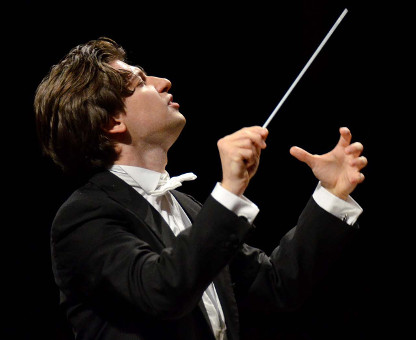
Daniele-Rustioni-by-Cophano-HP-AMC

Daniele Rustioni is nothing if not watchable. Small and dapper with a mop of floppy hair, he darts, he gesticulates, he bounces clear into the air. And in this CBSO concert he rocketed straight out of the blocks with a suave, streamlined account of Dvorak’s Carnival overture that left a midweek matinee crowd yelling with excitement.

It was easy to hear the strengths of this 32-year old Italian, whose spirited, idiomatic conducting was probably the best thing about WNO’s 2013 Donizetti Tudor trilogy. Rustioni can shape a phrase and make it sing (who mentioned bel canto?): he way he accompanied Kyle Horch’s creamy sax solo in Ravel’s orchestration of Mussorgsky’s Pictures at an Exhibition was almost sensuous. He takes a tactile pleasure in orchestral colours, bringing out the succulence of a pizzicato chord, and subtly pointing up a quiet bottom note from the bass clarinet.

His weaknesses – well, wasn’t it Richard Strauss who advised young conductors never to look at the brass: it only encourages them? And there was the strange, frustrating business of a Brahms Violin Concerto that never quite sounded at ease: fidgety, foursquare and punctuated by noisy blasts. Soloist Vadim Gluzman’s wiry tone and workmanlike delivery probably didn’t help, though it was noticeable that even in the Dvorak, Rustioni was cheerfully summoning up the kind of fortissimos that Sakari Oramo used to save for the end of Mahler symphonies.

But it was hard not to thrill to the jangling, tingling conclusion of Rustioni’s Pictures at an Exhibition, or to enjoy the full-fat low string sound of Samuel Goldenberg and Schmuyle, and the way Rustioni made Gnomus dance. To experience this kind of freshness and verve in such a familiar warhorse is reason enough to hope that we see Rustioni at Symphony Hall again.

Nicola Benedetti on Tour

05 Monday Oct 2015

Posted by richardbratby in Uncategorized

≈ Leave a comment

Tags

Amati Magazine, Birmingham Post, Mark-Anthony Turnage, Nicola Benedetti, Reviews

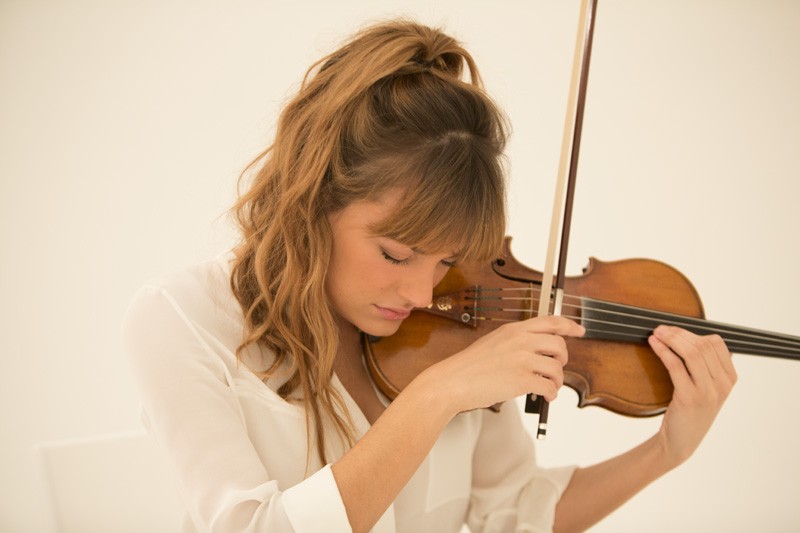
Nicola Benedetti - photo (c) Simon Fowler

Nicola Benedetti – photo (c) Simon Fowler

I reviewed Nicola Benedetti’s “Italy and the Four Seasons” tour (complete with Turnage premiere) at Symphony Hall last weekend. The Birmingham Post isn’t currently able to post reviews online, so here’s the review (below). Please do the honourable thing and pop out and buy the print edition once you’ve read it!

And for something completely different (well, OK still string-related) click here for my feature for Amati Magazine on the Royal Academy of Music.


A performance by a youth ensemble. Tchaikovsky’s Souvenir de Florence, in the string sextet version. A new chamber work by Mark-Anthony Turnage. There isn’t a promoter in Birmingham who could fill Symphony Hall for any one of these things. Yet when Nicola Benedetti fronts them, a near-capacity audience rises cheering to its feet.

That’s the thing to take away from this concert by Benedetti, cellist Leonard Elschenbroich and an 11-player ensemble. OK, so other violinists play with a sweeter tone; and not everyone will have appreciated the glossy full-page pictures of Benedetti that filled the expensive programme. But none of that detracts from the hugely positive role Benedetti plays in British musical life, and the seriousness with which she approaches what she does.

Hence the Birmingham premiere tonight of Turnage’s Duetti d’amore, a Ravel-inspired duo for Benedetti and Elschenbroich that veered from tender, skittish humour to full-throated passion. This was Turnage at his most lyrical, and the pair projected even its smallest gestures to the very back of the vast space. Souvenir de Florence for some reason, came across less vividly, despite a smiling performance and some breakneck speeds.

As for Vivaldi’s Four Seasons, what lingered were some gutsy, red-blooded tuttis and the chamber-music delicacy of Benedetti’s solo exchanges with her colleagues. Baroque bows and a lack of vibrato acknowledged period practice, while dramatic tempo-shifts within each movement made clear that Benedetti has her own very definite interpretative ideas.

And it was her idea to bring on a team of young string players from the National Children’s Orchestra – who performed the outer movements of Vivaldi’s concerto RV.310 as joyously and as musically as any professional band we’ve heard (and with a richer sound than some). A special moment in a feelgood evening; let’s hope that Benedetti’s clearly-sizeable fanbase will continue to support music-making like this after she’s left town.

In love with “Louise”

24 Friday Jul 2015

Posted by richardbratby in Uncategorized

≈ Leave a comment

Tags

Buxton Festival, Buxton Opera House, Donizetti, Gustave Charpentier, Louise, Reviews, The Arts Desk, Verdi

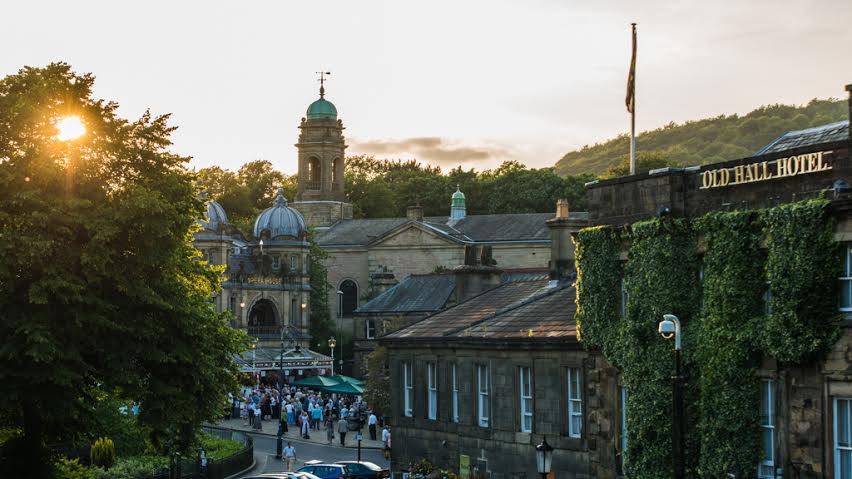
Buxton Opera House in Festival time

For three successive days this week, I’ve driven the lovely road from Lichfield across the Derbyshire border to Ashbourne and then along the roof of England through the High Peak, to Buxton, and its annual Festival. Its a trip I’ve long wanted to make (impossible before acquiring a car), and it was well rewarded – and not just because it’s a town full of antique and book shops,  faded Edwardian spa facilities and unpretentious Regency architecture. I was there to review three of the Festival’s opera productions: a better-than-expected Verdi Giovanna d’Arco, a disappointing Donizetti Lucia di Lammermoor and…and…Louise, lovely Louise.

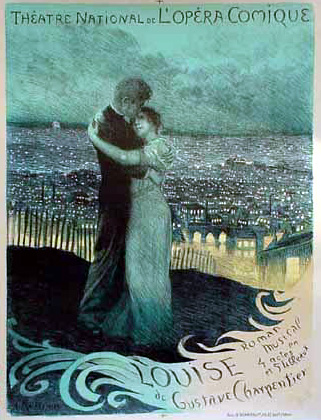
Louise: poster for the original 1900 production.

I’ve hankered after seeing this mouthwatering great slice of verismo a la Francaise since the day I read the description in (of all things) Gerhard von Westermann’s Opera Guide. Saki used it as a punchline in his own short story Louise – proof of just how popular it was in the years before the Great War. I had a feeling that Gustave Charpentier’s heroine and I would hit it off when I finally encountered her live (the last UK staging was in 1981, when, aged 8, I don’t think my 15p weekly pocket money would have run to a ticket) and here at last she was. OK, admittedly it was a concert performance (and how I wish they’d ditched the Donizetti – I mean, this’ll be my 4th different Donizetti production this year – and staged this instead), but as any music lover knows, the difference between listening to a CD and hearing anything live is that between splashing in a paddling-pool and swimming in the sea.

The result: I’m now obsessed. I’ve a brand new special-favourite opera. By ‘eck, it’s gorgeous. Any critic who says otherwise (and especially if they’ve recently bent over backwards to insist that some freshly-exhumed bel canto turkey is a neglected masterpiece) is just wrong. Entitled to their opinion, but wrong. So there.

Possibly my enthusiasm coloured my review of the Buxton Festival for The Arts Desk: you tell me.

Review: Lichfield Festival – The Juliet Letters

09 Thursday Jul 2015

Posted by richardbratby in Uncategorized

≈ Leave a comment

Tags

Birmingham Post, Elvis Costello, Jon Boden, Lichfield Festival, Reviews, Sacconi Quartet, The Arts Desk

017

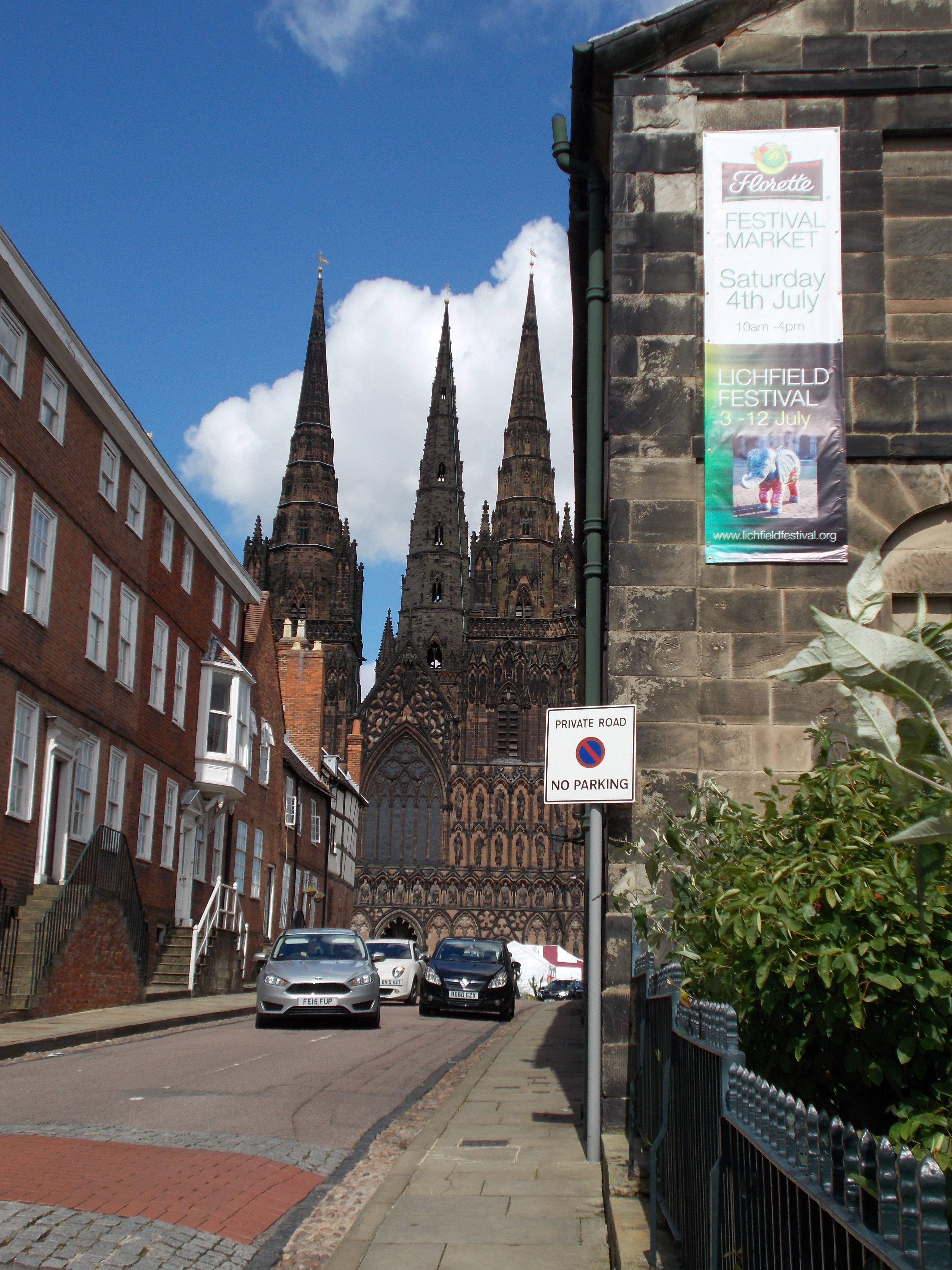
The Lichfield Festival is in full swing – and living just five minutes from the Cathedral, it’s hard not to feel you’re in the middle of something special even when you’re just walking to the shops! I’ll be producing a full round-up for The Arts Desk tomorrow, but meanwhile, since The Birmingham Post is experiencing difficulties posting my reviews of individual concerts to its website, I’ll be posting them here while the Festival is still under way. Even critics like to feel as if they’re part of something, after all…

(NB: No star ratings here –  editors and PRs love ’em but critics hate them, and I’m no exception. If you really do need to attach a score to an artistic performance like it’s a spelling test or something, they can be seen in the print edition of The Birmingham Post, available now).


Is it really 22 years since The Juliet Letters? In 1993, we mistook it for crossover: there was a lot of it about back then. Elvis Costello’s song cycle with the Brodsky Quartet seemed to follow in the tradition of George Martin’s quartet arrangements for the Beatles, or Sinatra’s recordings with the Hollywood Quartet. But crucially, The Juliet Letters comprised entirely original music: the joint product of Costello’s art as a songwriter and the creative instincts of the individual Brodskys. The result?

Well, as we discovered in this late night Lichfield Festival concert with Jon Boden and the Sacconi Quartet the result was something that, two decades on, requires neither Costello nor the Brodskys in order to make a powerful impact. Inevitably, there were glitches: microphones never sit easily with chamber groups. Costello aficionados hoping to hear a slick reproduction of the studio album will have been disappointed.

For the rest of us, though, the rough edges made this music speak more directly – more passionately – than ever. Not that Boden’s light, softly-shaded tenor wasn’t ideally suited to the Sondheim-esque wit of numbers like Romeo’s Seance and This Offer is Unrepeatable.

But Boden and the Sacconis played off each other, seeming to find a shared intensity in the searching, Berg-like Dear Sweet Filthy World, making tone-colour match curdling harmonies, and transforming I Thought I’d Write To Juliet into a miniature music-drama. Boden’s expression as Robin Ashwell’s viola solo in Last Post sobbed out into the vast space of the darkened cathedral said it all: this was chamber music of a high order.

Review: Lichfield Festival – The Magic Flute

09 Thursday Jul 2015

Posted by richardbratby in Uncategorized

≈ Leave a comment

Tags

Birmingham Post, Lichfield Cathedral, Lichfield Festival, Reviews, The Arts Desk, The Magic Flute

009

The Lichfield Festival is in full swing – and living just five minutes from the Cathedral, it’s hard not to feel you’re in the middle of something special even when you’re merely walking to the shops! I’ll be producing a full round-up for The Arts Desk tomorrow, but meanwhile, since The Birmingham Post is experiencing difficulties posting my reviews of individual concerts to its website, I’ll be posting them here while the Festival is still under way. Even critics like to feel as if they’re part of something, after all…

(NB: No star ratings here –  editors and PRs love ’em but critics hate them, and I’m no exception. If you really do need to attach a score to an artistic performance like it’s a spelling test or something, they can be seen in the print edition of The Birmingham Post, available now).


There’ve been times since 2010 when we’ve despaired of the Lichfield Festival. Now there’s a new artistic director, Sonia Stevenson and, on the basis of this opening concert performance of The Magic Flute, every reason to hope that things are back on course.

The sheer ambition was inspiring, even if the end result had a distinctly improvised, “let’s do the show right here” sort of feeling. There was no orchestra (Anthony Kraus and Ian Ryan played a re-working of Zemlinsky’s piano reduction), no chorus, and the sole gesture towards costume was Papageno’s pair of denim shorts.

But the singing was truly impressive – Kate Valentine as the First Lady was real luxury casting. Anna Dennis stole the show: her nuanced voice and understated intensity made Pamina a tragic figure, never more poignant than in her quartet with the Three Boys, sung with wonderful freshness and ensemble by ex-Cathedral choristers Jemima Richardson-Jones, Amber Jordan and Alice Windsor.

Alexander Sprague (Tamino) made up in tone for what he might have lacked in ardour. Richard Wiegold (Sarastro) had a voice of black velvet and Samantha Hay was a Queen of the Night of laser-like ferocity and focus. Adrian Thompson played Monostatos as a sleazy bank-manager, while as a long-suffering Papageno, you sensed that Jonathan Gunthorpe was fighting the urge to give a bigger, funnier performance than this staging allowed.

That was the single biggest problem: the spoken dialogue had been entirely cut and replaced with a hit-and-miss narration by Janice Galloway, spoken by Guy Henry. The Flute is not a long opera, and without the dialogue that Mozart expected, his characters are only half-complete. So it’s a tribute to the musical quality of this performance that we left with smiles on our faces – and a sense that the Festival’s heart is finally back in the right place.


Finzi vs Bridge

29 Monday Jun 2015

Posted by richardbratby in Uncategorized

≈ Leave a comment

Tags

Armonico Consort, Birmingham Post, Finzi, Frank Bridge, Rachmaninoff, Reviews, Tardebigge

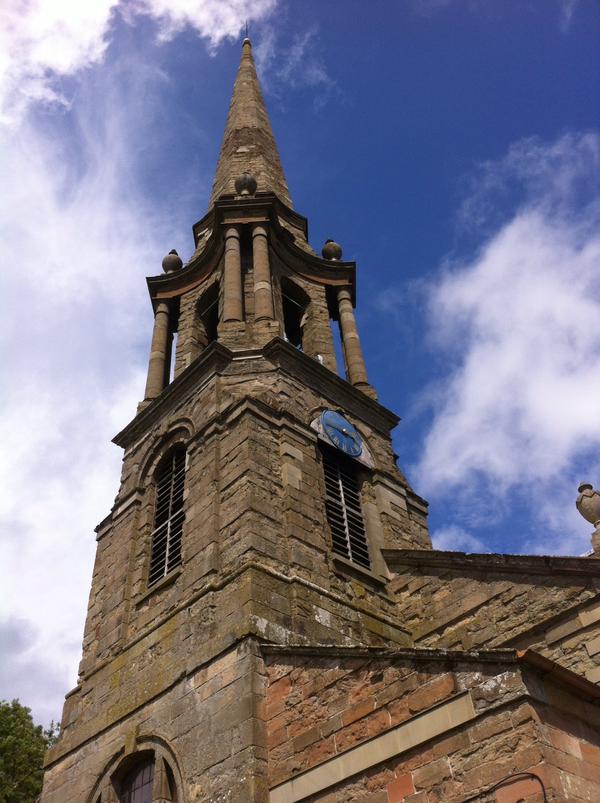
Tardebigge Steeple - photo by Annette Rubery.

Tardebigge Steeple – photo by Annette Rubery.

Two interesting reviews over the last few days: a beautiful Rachmaninoff Vespers (we’ll forgive then for spelling it “Rachmaninov” – grrr…) at St Mary’s Church, Warwick, and a song recital at Tardebigge church yesterday. It’s a fascinating place – a crumbling Georgian pile on a hill in the fields outside Bromsgrove, whose churchyard apparently contains the grave of the Queen of the Gypsies (we couldn’t find it). We were there for the annual Celebrating English Song series, and a setting like that naturally makes you think “English pastoral”. Sure enough, there was Finzi’s Dies Natalis at the top of the programme, beautifully performed but sounding a little threadbare without its full string orchestra.

But it went down well, and the Finzi Trust put up a good showing during the interval, complete with sales stall. Old Gerald clearly has a enthusiastic audience, and I’m gradually coming to see past his rather watery (IMHO) ideas and find something a bit knottier underneath: though the Clarinet Concerto and the Christmas cantata In Terra Pax are still the only two pieces of his that I’d actually go out of my way to hear. Maybe it’s the whole English cathedral choral thing; boy sopranos, modal harmonies, the aura of damp stone and dull Sunday teatimes that so many folk seem to find so magical, and which gives so much really rather feeble vocal music the status of cherished national treasure. I’ve never really been part of that world.

But the concert ended with a series of songs by Frank Bridge. No supporters’ club for him – the soprano Elizabeth Watts actually went out of her way to explain who he was. And yet – just as I, at least, expected – there it all was: freshness, clarity, craftsmanship, a depth of emotion combined with an almost classical grace, transparency and lightness-of-touch. In a word: inspiration – the real thing.

I’ve been finding all this in Frank Bridge for so many years: in his superb chamber music and his lovely, luminous orchestral scores. Why one neglected composer strikes a widely-felt chord and attracts a cult following, while another equally gifted (I’m being charitable to Finzi here) composer continues to need special pleading, I honestly don’t know. The suspicion rises – not for the first time – that my ears are simply wired differently from those of my musical fellow countrymen.

Review: Orchestra of the Swan – Dobrinka Tabakova premiere

10 Wednesday Jun 2015

Posted by richardbratby in Uncategorized

≈ Leave a comment

Tags

Dobrinka Tabakova, Orchestra of the Swan, Reviews, Stratford

The Birmingham Post isn’t always able to post online everything that I’ve written for its print edition, so – after a suitable time lag (you should really go out and buy the paper!) – I’ll be posting my recent reviews here. As per the print edition, they’re all fairly concise – just 250 words. This is of a performance at Stratford Arts House on 22nd May 2015.


Immediately before the world premiere of her new work High Line, Dobrinka Tabakova thanked conductor Davd Curtis and the Orchestra of the Swan for having the courage to programme an entire half-concert of contemporary music. And whether the large crowd was there principally to hear Tabakova’s music or Fauré’s Requiem, the way Curtis and Tabakova introduced High Line – a friendly discussion, illustrated with brief examples from the orchestra – was a masterclass in getting a potentially reluctant audience on side.

High Line itself – a musical picture of the famous New York park, with solo violin (Tamsin Waley-Cohen, making a sumptuous sound) and flugelhorn (Hugh Davies, relaxed and effortlessly jazzy) – drew a warm response. Distantly evoking Copland’s Quiet City, it’s an attractive score, perhaps slightly longer than its material could sustain, but nonetheless a strong contender for pole position in the not-exactly-crowded field of concertos for violin and flugelhorn.

Earlier we’d heard Tabakova’s Centuries of Meditations, a choral setting of Thomas Traherne originally composed for the 2012 Hereford Three Choirs Festival. Like John Adams in Harmonium, Tabakova generates a slowly-building sense of rapture over shimmering minimalist figuration. The excellent Orchestra of the Swan Chamber Choir sang with glowing fervour.

They brought the same conviction and beauty of sound to Fauré’s Requiem, in its original, viola-led scoring for chamber orchestra. Simon Oberst and Naomi Berry took the solos from within the choir: Berry’s dark-hued soprano and expressive vibrato made the Pie Jesu a more emotionally-charged experience than we’re used to. Slightly more nuanced phrasing from the orchestra might have lifted this performance from highly enjoyable to truly memorable.

Review: Sinfonia of Birmingham & Michael Seal

05 Friday Jun 2015

Posted by richardbratby in Uncategorized

≈ Leave a comment

Tags

Birmingham Post, Michael Seal, Reviews, Sinfonia of Birmingham

The Birmingham Post isn’t always able to post online everything that I’ve written for its print edition, so – after a suitable time lag (you should really go out and buy the paper!) – I’ll be posting my recent reviews here. As per the print edition, they’re all fairly concise – just 250 words. This is of a performance at Sutton Coldfield Town Hall on 18 May 2015.


There’s more than one great conductor / orchestra partnership in Birmingham. Michael Seal has been principal conductor of the Sinfonia of Birmingham since 2002, and they’ve grown together. To hear them is to experience something that’s rare even with professional orchestras: a conductor who knows exactly how to get the best from his orchestra, and a band that knows exactly how to respond. We’ve heard things from this team at Sutton Coldfield that, for pure musicality and communicative power, have far outstripped certain big-name concerts at Symphony Hall.

Those thoughts followed naturally from a performance of Nielsen’s Four Temperaments symphony that seemed to make every one of those points: taut, powerful and ebullient, yet with moments both of lyrical sweetness and real danger. Seal found space for detail, and to let his players sing (the Sinfonia has a wonderfully characterful woodwind section) while still maintaining the long line of the symphony’s architecture and propelling the music forward. The third, “melancholic”, movement grew imperceptibly from expressive oboe and cor anglais solos to two positively volcanic climaxes: the Sinfonia’s low brass made the floor shake.

Earlier, we’d heard violinist Charlotte Moseley in Tchaikovsky’s Violin Concerto; an accomplished, energetic performance with a big heart – the tone of her lower strings as she duetted with the clarinet in the Canzonetta was particularly treasurable. And Sibelius’ Finlandia grew as if in one single phrase from snarling opening to defiant finish. The last time we heard it done so convincingly, the conductor was Sakari Oramo.

Throwback Thursday: To slate or not to slate?

04 Thursday Jun 2015

Posted by richardbratby in Uncategorized

≈ Leave a comment

Tags

Lichfield Mercury, Reviews

This is a review I wrote for the Lichfield Mercury in 2009 – a guitar recital by someone who billed himself as a seasoned pro. Within a few minutes it became clear that he was nothing of the sort. I can only assume he’d hired the venue as a vanity project, perhaps with the encouragement of well-meaning friends. The only thing that made it bearable was the fact that – to all appearances – he seemed entirely unaware of just how badly he was playing.

I’d committed to write the review, and he was enthusiastically expecting it. (I don’t know if he ever read it: soon afterwards he asked me to be his Friend on Facebook, so I can only assume not.) But I didn’t want to be completely frank – he was clearly playing in good faith, and no-one’s in this business to be gratuitously cruel. Plus, at that point in time the Mercury subs simply cut out any negative comments. This is what I wrote in the end – I’ve changed his name.


Andrew Shilling’s solo guitar recital at the Lichfield Garrick Studio was billed as “From Paris to Buenos Aires”. Beginning in Napoleonic Paris, the programme finished in the twentieth century with two preludes and a Choro by Heitor Villa-Lobos, taking in Tarrega’s evergreen Recuerdos de la Alhambra along the way. It looked an attractive evening – on paper, at least.

The reality was toe-curlingly different.  From the very first notes of the first work – Antonio Nava’s four winsome “Seasons” sonatas – it was clear that something was badly wrong. Halting, fumbling, head buried in the score, Mr Shilling played as if he was seeing these pieces for the first time. Pushing on at a near-uniform volume and tempo, his performances of Ferdinando Carulli’s Solo Op.20 and Dionisio Aguado’s Fandango Varié were so garbled as to be unrecognisable.

Mr Shilling seemed slightly more at ease after the interval, and there were occasional flashes of confidence – even character – in his performance of Máximo Pujol’s first Suite del Plata. But even this was disfigured by the same faults that marred almost every bar of this concert: mis-struck chords, faulty tuning, trapped strings buzzing harshly, and a sense of rhythm that was vague to the point of non-existence. Quite simply, and with the best will in the world, this was not the performance of a professional artist – or even a competent amateur.

It was hard to know what to think, though the (roughly) one third of the audience who left at the interval had obviously made up its mind. The most charitable interpretation is that Mr Shilling was suffering from nerves. The sensation of fingers suddenly ceasing to obey mid-performance; of what went right in rehearsal inexplicably going wrong, is sickening for an artist, and no-one who’s ever performed in public would treat it lightly.

Nonetheless, a professional musician needs to confront and overcome this problem before they step on stage. Mr Shilling is by all accounts a well-respected guitar teacher, and his love for his instrument seems sincere. But this performance should never have been put in front of a paying audience in a professional venue.

← Older posts
Newer posts →

Contact Details

38 Beacon Street
Lichfield
United Kingdom
Staffordshire
WS13 7AJ

07754 068427

Archives

  • June 2020 (1)
  • October 2019 (2)
  • January 2018 (1)
  • December 2017 (2)
  • November 2017 (2)
  • October 2017 (1)
  • August 2017 (2)
  • July 2017 (1)
  • June 2017 (3)
  • April 2017 (2)
  • March 2017 (2)
  • February 2017 (2)
  • December 2016 (1)
  • September 2016 (3)
  • August 2016 (1)
  • July 2016 (1)
  • June 2016 (2)
  • May 2016 (1)
  • April 2016 (3)
  • March 2016 (6)
  • February 2016 (1)
  • January 2016 (3)
  • December 2015 (6)
  • November 2015 (4)
  • October 2015 (6)
  • September 2015 (5)
  • August 2015 (5)
  • July 2015 (8)
  • June 2015 (12)
  • May 2015 (12)
  • April 2015 (1)
  • February 2015 (1)
  • January 2015 (2)
  • December 2014 (4)
  • November 2014 (3)

Archives

Blog at WordPress.com.

Privacy & Cookies: This site uses cookies. By continuing to use this website, you agree to their use.
To find out more, including how to control cookies, see here: Cookie Policy
  • Subscribe Subscribed
    • Richard Bratby
    • Join 29 other subscribers
    • Already have a WordPress.com account? Log in now.
    • Richard Bratby
    • Subscribe Subscribed
    • Sign up
    • Log in
    • Report this content
    • View site in Reader
    • Manage subscriptions
    • Collapse this bar
 

Loading Comments...