• Blog
  • Clients
  • About Me

Richard Bratby

~ Classical music writer, critic and consultant

Richard Bratby

Tag Archives: Reviews

Review: Kidderminster Choral Society

29 Friday Apr 2016

Posted by richardbratby in Uncategorized

≈ Leave a comment

Tags

Birmingham Post, Haydn, Kidderminster, Reviews

The Birmingham Post isn’t always able to post online everything that I’ve written for its print edition, so – after a suitable time lag (you should really go out and buy the paper!) – I’ll be posting my recent reviews here. As per the print edition, they’re all fairly concise – just 250 words. This is of a performance at Kidderminster Town Hall on Saturday 19  March.


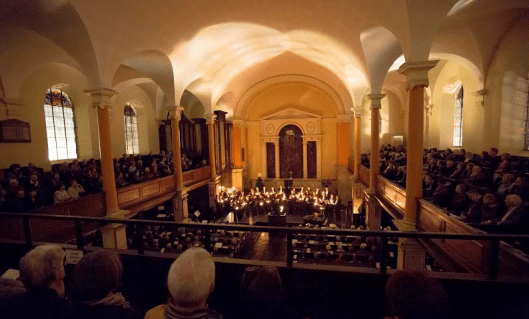
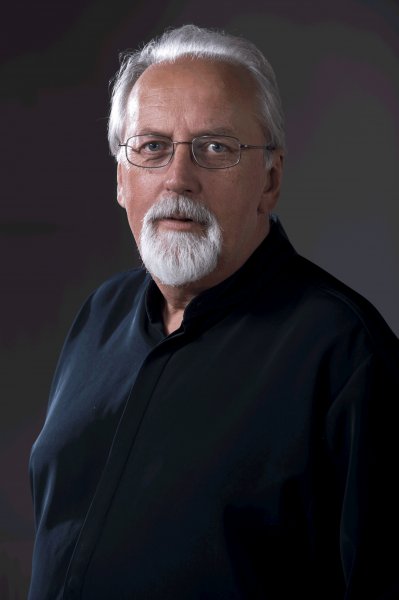
Handel’s The King Shall Rejoice, Haydn’s Nelson Mass and Mozart’s anything-but-solemn Solemn Vespers – the Kidderminster Choral Society clearly likes to keep itself busy. This was a concert of pretty much wall-to-wall choral singing, and none the worse for it: three top-flight masterpieces delivered with energy and zing under the Society’s artistic director Geoffrey Weaver.

And that was despite the stage arrangements at Kidderminster’s Victorian Town Hall – which split the choir in two and stacked them steeply on either side of the organ. The KCS is clearly well-used to this: they produced a big, bright mass of sound, with a brilliant soprano section and a more than usually lively team of altos. In the Haydn, they sounded like they were enjoying every note. Weaver kept it bowling along and the choir responded with lively, natural phasing and crisp, clearly enunciated interjections in the Gloria.

Perhaps he might have paced the Benedictus to make more a climax out of the arrival of Haydn’s warlike trumpets – but there was no doubt that the spirit of the thing was there in spades. It helped that they had such a winningly youthful line-up of soloists: contralto Elisabeth Paul, tenor Christopher Fitzgerald-Lombard and bass Andrew Randall. But the real heroine of the evening was the soprano Gemma King, standing in at one day’s notice, and singing with a pure, vibrato-light tone and such smiling freshness that you’d never have known it.

A couple of caveats: there’d be room in the nicely-produced programme book for the text and translations – these should be provided as a matter of course. And as Richard Strauss once said: don’t look at the trombones, it only encourages them. Throughout the first half, one of the Elgar Sinfonia’s trombonists (unnamed in the programme) honked it out so noisily that any chance of distinguishing the chorus’s words was obliterated, at least from where I was sitting. 

Review: Klee Quartet plays Kurtag and Gurney

23 Wednesday Mar 2016

Posted by richardbratby in Uncategorized

≈ Leave a comment

Tags

Birmingham Conservatoire, Birmingham Post, Codsall, Gurney, Klee Quartet, Kurtag, Reviews

St Nicholas Codsall

The Birmingham Post isn’t always able to post online everything that I’ve written for its print edition, so – after a suitable time lag (you should really go out and buy the paper!) – I’ll be posting my recent reviews here. As per the print edition, they’re all fairly concise – just 250 words. This is of a performance at Codsall Community Arts Festival on Tuesday 15  March.


You’ve got to hand it to the Codsall Community Arts Festival. Many festivals simply pick their concert programmes from a set menu provided by the ensemble. But at Codsall, having made the Great War a theme, they contacted Gloucester Library, sought out the manuscript of Gurney’s incomplete String Quartett [sic] of 1918-19, and persuaded the Klee Quartet to play it alongside Purcell’s Fantasia No.12 and – seriously – György Kurtág’s Six Moments Musicaux.

That would be a risky programme even at Birmingham Town Hall. I’m pleased to report that St Nicholas’s Church was well filled and that the audience listened with every sign of intense concentration, barring the lady next to me who unwrapped and munched a Mars Bar in the second movement of the Gurney. Did it work? The first half certainly did.

The Tokyo-based Klee Quartet – currently studying at Birmingham Conservatoire – plays with subtlety, style and intense commitment. They began the Fantasia without vibrato, gradually starting to colour Purcell’s plaintive D minor phrases as the music unfolded. Then they launched straight into the Kurtág – with passion, precision and a range of colours that made every pizzicato slide or barely-audible sul ponticello shiver tell its own story. Above it all, leader Naoko Senda’s rich, ardent tone left no doubt that we were hearing emotion as well as fierce intelligence.

If only they’d managed to get quite so completely inside the Gurney: though much as it hurts to say it, maybe there isn’t really very much to get inside. It’s tender and lyrical: it’s also rambling and diffuse. The Klees were clearly game, but even they couldn’t quite convince you that there were worthwhile ideas to be found beyond the ravishing first theme of the Adagio. Still, Gurney needs to be heard, and thanks to the Codsall Festival he was. That’s something.

Review: WNO’s The Marriage of Figaro

19 Saturday Mar 2016

Posted by richardbratby in Uncategorized

≈ 1 Comment

Tags

Birmingham Hippodrome, Reviews, The Birmingham Post, The Marriage of Figaro, Welsh National Opera

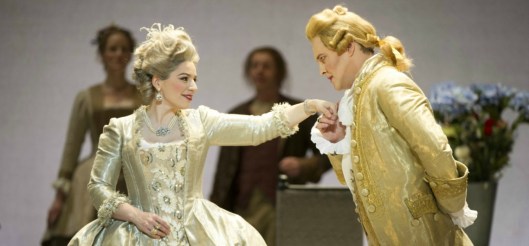
WNO Figaro Countess

Elizabeth Watts & Mark Stone (Countess & Count Almaviva) – picture by Richard Hubert Smith

The Birmingham Post isn’t always able to post online everything that I’ve written for its print edition, so – after a suitable time lag (you should really go out and buy the paper!) – I’ll be posting my recent reviews here. As per the print edition, they’re all fairly concise – just 250 words. This is of a performance at Birmingham Hippodrome on Wednesday 23 March, a sort of addendum to my Spectator review of the opening night in Cardiff a fortnight earlier. 


At the very end of The Marriage of Figaro, as the Almaviva household’s crazy day races towards its conclusion, the betrayed Countess declines her revenge and instead forgives her jealous, philandering husband. Done well, it’s one of the most poignant moments in all Mozart – in other words, in all of theatre.

In this new production from Welsh National Opera, it wasn’t just the great, compassionate glow that flooded from Lothar Koenigs’ orchestra that made the eyes well up. It wasn’t even Elizabeth Watts’s radiant singing as the Countess. It was the way Watts took the Count (Mark Stone) by the hand and for the first time in the whole evening, looked him in the eye. One little detail, a single moment of human contact – and yet one that summed up everything that made director Tobias Richter’s achievement so utterly glorious.

It fizzed. It sparkled. And with a near-ideal cast, everyone played joyously off each other. In David Stout’s witty, handsomely-sung Figaro and Anna Devin’s sunny, spirited Susanna, Richter had a central couple who were both entirely believable and enormous fun to be around. With her gawky movements and sweet but plangent tone, Naomi O’Connell’s Cherubino was the girl-crazy teenage boy to perfection.

As Basilio, Alan Oke rolled his r’s with deliciously pedantic relish, while Richard Wiegold’s Bartolo and Susan Bickley’s Marcellina managed the transition from pantomime baddies to doting parents with genuine charm. And under Richter’s direction, even the Count evoked sympathy, Stone’s features crumpling with the frustration and puzzlement of a man who’s essentially weak rather than bad.

Sue Blane’s colourful mock-Georgian costumes gave the whole thing the tiniest spice of artificiality – just enough to make it ping off the stage. And to hear the clarity and comic timing these singers brought to their lines (in Jeremy Sams’ translation), with an audience laughing in real time, was a vindication of WNO artistic director David Pountney’s decision to have it sung in English. Ralph Koltai’s semi-abstract sets won’t have been to all tastes, but they focused attention on what really mattered: the warmth of the human comedy unfolding beneath them, and some of the freshest singing and acting you could possibly hope for. In short, if you get a chance to see this production, take it. It’s basically perfect.

Review: Handel’s Orlando

08 Tuesday Mar 2016

Posted by richardbratby in Uncategorized

≈ Leave a comment

Tags

Harry Bicket, Iestyn Davies, Reviews, The Birmingham Post, The English Consort, The Spectator, Welsh National Opera

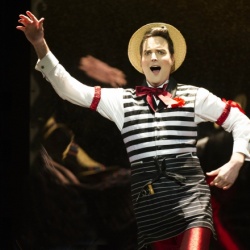
WNO Figaro

Nicholas Lester in WNO’s The Barber of Seville. Robbie Rotten, I’m telling you.

The Birmingham Post isn’t always able to post online everything that I’ve written for its print edition, so – after a suitable time lag (you should really go out and buy the paper!) – I’ll be posting my recent reviews here. As per the print edition, they’re all fairly concise – just 250 words. This is of a performance at Birmingham Town Hall on Friday 26 February.

Other recent reviews include my takes on WNO’s Figaro Forever trilogy in The Birmingham Post and The Spectator.


Dr Johnson defined opera as “an exotic and irrational entertainment” – and for Exhibit A, he could have taken Handel’s Orlando. No opera can be judged fairly from a concert performance. But with the non-musical drama stripped out, Orlando’s high-voiced heroes, grandiose rhetoric and supernatural interventions veer dangerously towards Monty Python. By the umpteenth time that someone in this concert performance by Harry Bicket and The English Concert threatened to kill themself over love, honour or whatever, the Town Hall audience was openly laughing.

Why wouldn’t they? This was a terrifically entertaining evening, and the performances were uniformly superb. Bicket had assembled a dream cast. Countertenor Iestyn Davies blazed as the antihero Orlando, before delivering more reflective passages in tones so mellow that they almost seemed too lovely for a character who’s basically the ex-boyfriend from hell. In the trouser role of African prince (and dreamboat) Medoro the rich-voiced mezzo Sasha Cooke came across with a really masculine air of pride, while Kyle Ketelsen as Zoroastro looked every inch the magus in white tie and tails – and delivered majestic, ringing sound to match.

But at the centre of the drama are the oriental queen Angelica and the shepherdess Dorinda – and Erin Morley and Carolyn Sampson were ideal in every way. Morley’s light, brilliant soprano despatched Handel’s glittering coloratura with jewel-like clarity and poise, while Sampson’s vocal purity and grace made her the picture of pastoral innocence – until the moment in Act Three when, overcome by emotion, her voice deepened and darkened thrillingly and she brought the house down.

Bicket and his band responded exuberantly to Handel’s every detail, the continuo players swathing Angelica’s entrance in great flourishes of sound, and basses digging grittily in as Orlando descended into madness. The only way they could have served Handel better would have been with a fully-staged production.


What I did in February (bits of it)

02 Wednesday Mar 2016

Posted by richardbratby in Uncategorized

≈ Leave a comment

Tags

Gramophone, Monocle, Programme Notes, Reviews, The Arts Desk, The Birmingham Post, The Spectator

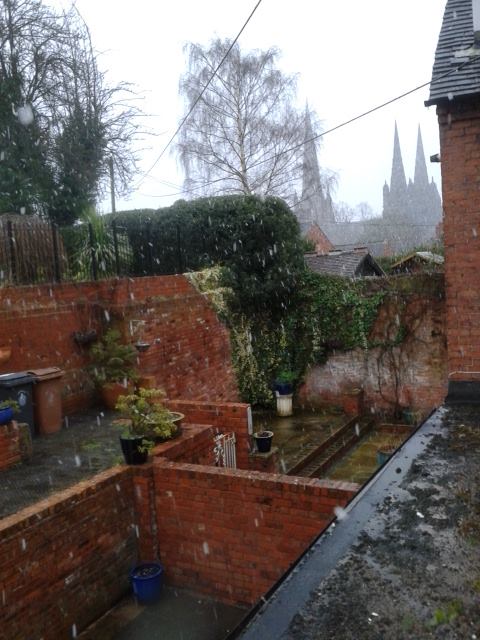
Lichfield Snow

Since I posted at the end of January, I’ve written programme notes on the following works. I’ve also published reviews in Gramophone, The Spectator, The Arts Desk and a few times in The Birmingham Post. And – for reasons that still remain unclear to me – appeared on Monocle Radio. This is why I’ve been a bit remiss with the blog. I’ll try to be better…

Albeniz: Suite Espagnole

Bach: D minor Chaconne

Bartók: Violin Concerto No.1

Beethoven: Piano Concerto No.2

Beethoven: Piano Sonata in D minor (“Tempest”)

Beethoven: Piano Trio Op.70 No.2

Brett Dean: Wolf-Lieder

Bridge: Two Old English Songs

Britten: Frank Bridge Variations

Bruch: Eight Pieces Op.83

Debussy: Images

Delius: The Song of the High Hills

Falla: Fantasia Baetica

Glazunov: Grand Adagio from “Raymonda”

Haydn: Fantasia in C

Holst: Song of the Night

Honegger: Pacific 231

Lalo: Symphonie Espagnole

Mendelssohn: Violin Sonata in F (1838)

Oliver Knussen: Ophelia Dances

Rodgers and Hammerstein Gala

Rodrigo: Fantasia para un gentilhombre

Scarlatti: Five Sonatas

Schubert: Rosamunde incidental music

Schubert: Four Moments Musicaux

Schumann: Marchenerzahlungen

Sibelius: Symphony No.5

Sibelius: The Swan of Tuonela

Sibelius: Violin Sonatina

Stravinsky: Four Norwegian Moods

Symphonic Disco Spectacular

Vaughan Williams: A Pastoral Symphony

Vaughan Williams: Linden Lea

Vaughan Williams: Symphony No.4

Vaughan Williams: Tallis Fantasia

Walton: Richard III – Prelude

Waxman: Carmen Fantasy


Review: CBSO / Buchbinder

27 Saturday Feb 2016

Posted by richardbratby in Uncategorized

≈ Leave a comment

Tags

Beethoven, Birmingham Post, CBSO, Reviews, Rudolf Buchbinder

The Birmingham Post isn’t always able to post online everything that I’ve written for its print edition, so – after a suitable time lag (you should really go out and buy the paper!) – I’ll be posting my recent reviews here. As per the print edition, they’re all fairly concise – just 250 words. This is of a performance at Symphony Hall on Saturday 13 February.


When a pianist directs a concerto from the keyboard, it’s supposed to be a liberation. Soloist and orchestra commune together without any distraction from that tiresome character with the baton: the result is like large-scale chamber music. Well that’s the theory, anyway. It stands or falls on the soloist’s basic ability to keep the whole thing in time.

There was never any likelihood of that being an issue in this final instalment of Rudolf Buchbinder’s Beethoven concerto cycle with the CBSO. The CBSO players are too skilled, too alert and too consummately professional to let anything fall down on the job. And with leader Zoë Beyers gesturing heroically from the front desk, the orchestral playing was crisper, smarter and more characterful than you’d think possible from Buchbinder’s vague, infrequent hand gestures.

If only he’d stuck to the piano! Buchbinder’s a hugely experienced artist, and the warmth of his reception shows that he has a natural connection with the Symphony Hall audience. But with his role split two ways, he never sounded wholly comfortable. Moments – a chain of translucent, feather-weight chords in the Largo of the First Concerto, the rapturous way he spun the melodic line over the Adagio of the Emperor concerto – showed what Buchbinder might have given us under different circumstances. Elsewhere cadenzas sounded fumbled, his fortissimos clangourous and harsh.

Of the two works in this short concert, it was the Emperor that came off best, taken at a cracking pace with a martial swagger that made the most of Buchbinder’s sometimes breathless approach. The First Concerto, by contrast, was baggy, and while the CBSO woodwinds delivered some lovely solos (Buchbinder gave clarinettist Oliver Janes a well-deserved bow), this was Beethoven as prose rather than poetry. You couldn’t help feeling that both soloist and orchestra were sketching only the bare outlines of the performances they would have given if a conductor had been present.


Review: Birmingham Philharmonic Orchestra

31 Sunday Jan 2016

Posted by richardbratby in Uncategorized

≈ Leave a comment

Tags

Birmingham Philharmonic, Birmingham Post, Reviews, Sutton Coldfield

The Birmingham Post isn’t always able to post online everything that I’ve written for its print edition, so – after a suitable time lag (you should really go out and buy the paper!) – I’ll be posting my recent reviews here. As per the print edition, they’re all fairly concise – just 250 words. This is of a performance at Sutton Coldfield Town Hall on Sunday 17 January.

I voted for Delius’s On Hearing the First Cuckoo, by the way. Someone had to.


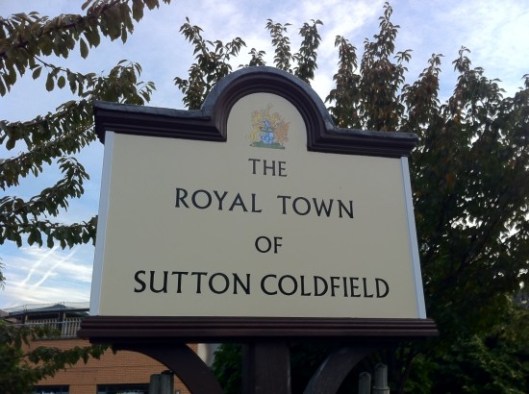
Sutton Coldfield

Light music is a vanishing art. Any student conductor these days can thrash out a passable Mahler symphony: but finding the sort of dapper, carefree sparkle that Thomas Beecham used to bring to Suppé overtures, or pieces like Ponchielli’s Dance of the Hours, is a lot harder.

Both Suppé (an enjoyably brisk Light Cavalry overture) and Ponchielli featured in this enjoyable programme by the Birmingham Philharmonic Orchestra under Michael Lloyd; plus Sullivan’s Overture Di Ballo and Eric Coates’s London Suite. It’s the sort of music that’s usually carelessly described as “popular”: but can you remember when, say, the CBSO last played the ballet music from Gounod’s Faust? Me neither.

In any case, you got the distinct impression that the BPO – 75 years old in 2016 – saw this concert as a sort of early birthday present to itself. Audience and orchestra members took turns to vote on certain items in the programme: the audience opted by a landslide for Nimrod, while the orchestra went, slightly unimaginatively, for the finale of Dvorak’s Ninth. Still, they clearly know their strengths: this and the other conventionally “serious” piece – Saint-Saëns’ Danse Macabre, stylishly shaded, with gutsy fiddle solos from leader Cristinel Băcanu – were the two items in which the BPO seemed most at ease.

Elsewhere: well, Sutton Coldfield Town Hall’s carpet-showroom acoustic is merciless to violins. It might perhaps have been safer to have opened with the Suppé rather than the Sullivan. But the Ponchielli fizzed nicely, and elegant cello and sax solos added a touch of West End glamour to the London Suite. Lloyd’s Knightsbridge March zipped along like a military two-step, helped by some deliciously alert and musicianly percussion playing. But folks, please: leave the bottled water offstage.

One concert, two write-ups

21 Monday Dec 2015

Posted by richardbratby in Uncategorized

≈ Leave a comment

Tags

Birmingham Post, Christmas, Ex Cathedra, Reviews, The Arts Desk

Ex Cathedra candlelight by Neil Pugh 2

I’ve got two new reviews up today, both of the same concert. I knew that the annual Christmas Music by Candlelight concerts in Birmingham’s Georgian St Paul’s Church would be worth the effort: our Lichfield neighbour Jeffrey Skidmore never fails to come up with a programme that offers more than enough to write about, even with two completely different reviews to fill. So here’s the short review I wrote for the general readership of The Birmingham Post, and the more extended piece for the The Arts Desk.

jeffrey skidmore-2012-credit-adrian-burrows

Jeffrey Skidmore – photograph by Adrian Burrows

As ever, I could easily have written another 1000 words for both – and that’s without describing the delicious mulled wine that we were kindly offered by the retired Ex Cath veteran who shared our pew!

Review: Birmingham Conservatoire Brass.

11 Friday Dec 2015

Posted by richardbratby in Uncategorized

≈ Leave a comment

Tags

Birmingham Conservatoire, Birmingham Post, Reviews, William Walton

The Birmingham Post isn’t always able to post online everything that I’ve written for its print edition, so – after a suitable time lag (you should really go out and buy the paper!) – I’ll be posting my recent reviews here. As per the print edition, they’re all fairly concise – just 250 words. This is of a performance at Birmingham Conservatoire on 4 December 2015.


Two questions arose from this Shakespeare-themed festive concert by Birmingham Conservatoire’s brass department. Firstly: with the Shakespeare 400th Anniversary nearly upon us, is it possible to hear too much of Walton’s music for Henry V? And secondly: seriously, Christmas? Already?

Well, with Victoria Square already full of seasonal sausage-vendors it’s too late to cry humbug. As Christmas concerts go, this was an imaginative programme, with Ian Porthouse and Andrew Stone-Fewings sharing conducting duties between the Conservatoire’s Symphonic Brass Ensemble and Brass Band. Alwyn Green’s new arrangement of Raymond Leppard’s brisk, playful setting of When Daisies Pied stood out for invention; soprano Cecily Redman delivered her “cuckoos” with an impressively straight face.

Prokofiev’s Montagues and Capulets was a stretch too far for the Symphonic Brass’s trumpets, but Edward Watson’s setting of The Decorations, a bit of whimsy by Alan Titchmarsh proved a surprisingly effective showcase for the colours and quickfire responses of the Brass Band. Actors Katy Stephens and Jo Stone-Fewings got into the spirit with gusto. Edward Watson’s Richard III-inspired Middleham Fayre, and Meditation: The Stable were both premieres: enjoyable contributions to the great British brass tradition.

Which brings us back to the first question, and a new “Shakespeare Scenario” devised by Watson from Walton’s Henry V – longer than the composer’s own unsatisfactory orchestral suite, and scored for narrator (Jo Stone-Fewings) plus combined Symphonic Brass and Brass Band. Setting aside a misguided sequence of electronic sound effects, it worked brilliantly: with gloriously woozy trombones in the Boar’s Head Interlude and eerie pianissimo rustles from muted cornets in the aftermath of Agincourt. If every performance of this music over the next twelve months is as colourful and imaginative as this, we should be able to cope.

Review: Little & Lane at Birmingham Conservatoire.

10 Thursday Dec 2015

Posted by richardbratby in Uncategorized

≈ Leave a comment

Tags

Birmingham Conservatoire, Birmingham Post, Reviews

The Birmingham Post isn’t always able to post online everything that I’ve written for its print edition, so – after a suitable time lag (you should really go out and buy the paper!) – I’ll be posting my recent reviews here. As per the print edition, they’re all fairly concise – just 250 words. This is of a performance at Birmingham Conservatoire on 1 December 2015.


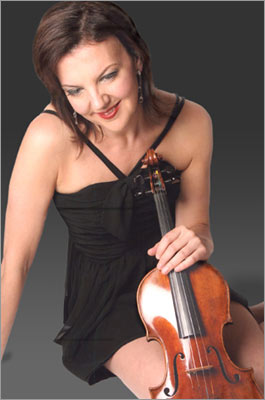
Tasmin Little

The ideal duo partnership is more than the sum of its parts. The two musical personalities don’t merge, exactly, but balance, complement and inspire each other to create a performance that enshrines the qualities of both artists – and still sounds like it sings with one voice.

That’s exactly what we got from Tasmin Little and Piers Lane in César Franck’s Violin Sonata, the climax of this lunchtime recital at Birmingham Conservatoire. It’s too simple to say that Lane’s piano represented the dark and Little’s violin the light side of Franck’s masterpiece. Both shared the same ability to charge a repeated sequence of notes with mounting emotional intensity; both understood instinctively when to make a phrase growl or gleam.

But even at its most tranquil, an undercurrent of passion drove the whole performance. Franck’s runaway accelerandos and torrential outbursts of emotion have rarely sounded more natural, or more necessary. Earlier, the pair had dispatched Brahms’s FAE Scherzo in a single symphonic sweep, and made a poetic case for Szymanowski’s neglected D minor sonata, Lane colouring his staccato chords to emulate the texture of Little’s pizzicato, and Little spinning delicate golden tracery in the skies above.

And as an encore, they pulled out an exquisite, recently rediscovered miniature by William Lloyd Webber – father of the Conservatoire’s new principal. It was enough to make you forget that you were in the grotty old Adrian Boult Hall. With artists of this quality and a sizeable and enthusiastic audience, there was no better demonstration of the promising new spirit that seems to be blowing through the Conservatoire.


← Older posts
Newer posts →

Contact Details

38 Beacon Street
Lichfield
United Kingdom
Staffordshire
WS13 7AJ

07754 068427

Archives

  • June 2020 (1)
  • October 2019 (2)
  • January 2018 (1)
  • December 2017 (2)
  • November 2017 (2)
  • October 2017 (1)
  • August 2017 (2)
  • July 2017 (1)
  • June 2017 (3)
  • April 2017 (2)
  • March 2017 (2)
  • February 2017 (2)
  • December 2016 (1)
  • September 2016 (3)
  • August 2016 (1)
  • July 2016 (1)
  • June 2016 (2)
  • May 2016 (1)
  • April 2016 (3)
  • March 2016 (6)
  • February 2016 (1)
  • January 2016 (3)
  • December 2015 (6)
  • November 2015 (4)
  • October 2015 (6)
  • September 2015 (5)
  • August 2015 (5)
  • July 2015 (8)
  • June 2015 (12)
  • May 2015 (12)
  • April 2015 (1)
  • February 2015 (1)
  • January 2015 (2)
  • December 2014 (4)
  • November 2014 (3)

Archives

Create a free website or blog at WordPress.com.

Privacy & Cookies: This site uses cookies. By continuing to use this website, you agree to their use.
To find out more, including how to control cookies, see here: Cookie Policy
  • Subscribe Subscribed
    • Richard Bratby
    • Join 29 other subscribers
    • Already have a WordPress.com account? Log in now.
    • Richard Bratby
    • Subscribe Subscribed
    • Sign up
    • Log in
    • Report this content
    • View site in Reader
    • Manage subscriptions
    • Collapse this bar
 

Loading Comments...