• Blog
  • Clients
  • About Me

Richard Bratby

~ Classical music writer, critic and consultant

Richard Bratby

Tag Archives: Liverpool Philharmonic

So that was January…

31 Sunday Jan 2016

Posted by richardbratby in Uncategorized

≈ 1 Comment

Tags

CBSO, Grieg, Halle, Liverpool Philharmonic, The Arts Desk, The Spectator, Wigmore Hall

105

Bit of a jolt to notice the date – and I realise I’ve been rather quiet on here this month. It’s not that I haven’t been up to anything; it’s that I’ve had my hands gratifyingly full – this is peak season for copywriting and some of my best clients have been launching some very exciting projects, which tends to keep me busy.

My pre-Christmas review of the Royal Opera’s Eugene Onegin appeared in The Spectator a couple of weeks back, and next week I’ll be reviewing Mozart revivals at Opera North and English National Opera. I wrote a piece for The Arts Desk on the CBSO’s thinly-veiled public audition of Mirga Grazinyte-Tyla; whether or not (as many audience members and all the critics in Birmingham are hoping) they offer her the vacant music-directorship (and the CBSO players have strong opinions of their own, often far-removed from what audiences and critics think), I’m in no doubt that she’s a hugely impressive and serious artist, with musicality just streaming out of her fingertips.

Omer Meir Wellber seems to be regarded as another front-runner: he’s a strikingly intelligent artist with something powerful to say (qualities not always valued in the UK), and would also be a fascinating appointment. At least that’s how it sounds from the stalls. The players may feel differently, and if we suddenly heard that either Nicholas Collon or Andrew Gourlay was the anointed one; well, that’d be no bad thing either. But a lot of the rumours that are floating around are transparently nonsense (when dealing with Birmingham, you can generally discount any speculation that originates in London): we’ll just have to wait and see.

Meanwhile, I’ve been delighted to acquire some new clients since the New Year: including the Halle, the Yehudi Menuhin International Violin Competition and Gramophone – hugely excited to be working for them.  I’ve also been working on sleeve notes for Warner Classics’ next Rattle / CBSO box set – an enjoyable pretext to catch up with my old colleague Peter Donohoe, who always has something thought-provoking to say. I popped up to Liverpool and saw the astonishing backstage transformation of my favourite concert hall in the world, the beautiful Philharmonic Hall. I wrote a concert script for Margherita Taylor – fun job. And there was a substantial programme note for a major concert at the Wigmore Hall – something to really get my teeth into.

And purely for pleasure, we took in the live New York Met cinema relays of The Pearl Fishers and Turandot (eye-popping) – the baristas at the Tamworth Odeon branch of Costa are starting to recognise us – and drove over to Sheffield for the last night of The Crucible’s production of Show Boat, a musical I’ve wanted to see on stage for a very long time.

110
108

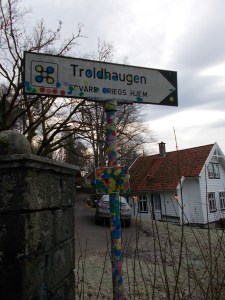
Seems a very long time since we were in Bergen for new year, clambering around Grieg’s house at Troldhaugen – closed and completely deserted, and somehow all the more magical for it – on a clear but icy Norwegian morning. By pure coincidence, I was writing about Grieg’s C minor Violin Sonata as soon as I returned. He’s a composer I can’t help loving, and the more I listen, the more fascinated – and moved – I am by his music. I’d like to have the chance to write more about him – anyone..?

107

Throwback Thursday: The Berlin Philharmonic in Liverpool

14 Thursday May 2015

Posted by richardbratby in Uncategorized

≈ Leave a comment

Tags

Berliner Philharmoniker, Jonathan Kelly, Liverpool Philharmonic, Metro, RLPO, Simon Rattle

There’s one orchestra in the news this week – though let’s be honest, as we saw in  February, everything the Berlin Philharmonic do is newsworthy. Here’s the article that I wrote for Metro in 2008, when they played at the Liverpool Philharmonic Hall as part of the city’s year as European Capital of Culture. I was particularly chuffed to be able to talk to my old Birmingham colleague Jonathan Kelly for this article – not the first great musician to take the journey from Birmingham to Berlin, and not, I rather suspect, the last…


“I don’t want to sound arrogant” says Pamela Rosenberg.  “I think we’re considered to be the flagship orchestra in Germany and I know that our city, and chancellor Angela Merkel, see us as ambassadors.  But internationally, there are a lot of wonderful orchestras – and we’re in the mix”.

Fair enough.  Until, that is, you realise that Rosenberg is General Manager of the Berlin Philharmonic – and suddenly it becomes an understatement on an heroic scale.  For classical music fans, the BPO’s Liverpool gig is the unquestioned climax of 2008.  Tickets sold out months ago.  Because as anyone even remotely interested in classical music knows, the Berlin Philharmonic is arguably the finest orchestra in the world.

And best of all, it’s conducted by a Liverpudlian.  There’s not a music-lover on Merseyside who isn’t choked with pride to see Sir Simon Rattle coming home at the head of this legendary band.  But to appreciate the true significance of Rattle’s appointment as principal conductor in 2002, you need to understand the BPO’s unique place in German culture.  In the first half of the twentieth century, under its visionary conductor Wilhelm Furtwängler, it established itself as the supreme interpreter of the great German classics, from Bach through to Wagner.

Later, under the autocratic Herbert von Karajan, it developed a rich, silky-smooth sound that set a new international benchmark for orchestral playing.  “You may never again hear playing as beautiful as this” one critic is said to have told a younger colleague after a BPO concert “but now you know that it can be done”.

Berlin Phil oboist Jonathan Kelly feels the same way.  “I’ve been listening to CDs of this orchestra since I was a boy.  For me it’s always been an ideal”.  And seated bang in the centre of the orchestra, he’s uniquely placed to experience the Berlin sound.

“The sound is part of the orchestra’s tradition, something it’s very proud of” he explains.  “Everyone who joins the orchestra is aware of that, and maybe even adapts their own sound to fit.  What’s special about the sound is that it has this almost animal quality that rises up in concert, like a living thing.  It’s this wonderful dark sound, but also very strong.  This orchestra has incredible reserves of energy.  Everyone, from the front to the back, gives absolutely everything in a concert.  I love that.”

So what prompted the musicians to embrace a conductor as defiantly un-traditional as Rattle?  The BPO’s Liverpool programme – Messiaen’s orgasmic Turangalîla-Symphonie – could hardly be further from the orchestra’s ancestral heartland of Beethoven and Brahms.  Rosenberg sees Rattle’s appointment as proof of the musicians’ commitment to the future.

“I think it was a signal that the orchestra wanted to embrace innovation” she suggests. “Rattle’s broad-minded approach to music, and the huge scope of his interests, from early music to the 21st century – this was of great interest to the musicians.  Now, there’s a synergy – artistic exploration is fed by tradition, and that exploration refreshes the tradition.”  Kelly agrees:

“In some ways he’s found a meeting of two traditions.  Older players in the orchestra, especially the ones who played under Karajan, are very positive about him.  They like the fact that he’s so human.  He’s not a grand maestro type – he just wants to make music with them.”

And no orchestra makes music like the Berlin Phil.  At a time when Liverpool’s own rather fine Philharmonic is scaling new heights, the BPO is an inspiring example of how an orchestra can come to embody a modern city.  Rosenberg has a message for the European Capital of Culture:

“Classical music is vital for the communal health of a city.  It can be a galvanising instrument.  Both in Liverpool and in Berlin, orchestras have the potential to make a huge difference.  An orchestra contributes to both the social and the spiritual life of a city.  Without one, you’re looking at a wasteland”.

Contact Details

38 Beacon Street
Lichfield
United Kingdom
Staffordshire
WS13 7AJ

07754 068427

Archives

  • June 2020 (1)
  • October 2019 (2)
  • January 2018 (1)
  • December 2017 (2)
  • November 2017 (2)
  • October 2017 (1)
  • August 2017 (2)
  • July 2017 (1)
  • June 2017 (3)
  • April 2017 (2)
  • March 2017 (2)
  • February 2017 (2)
  • December 2016 (1)
  • September 2016 (3)
  • August 2016 (1)
  • July 2016 (1)
  • June 2016 (2)
  • May 2016 (1)
  • April 2016 (3)
  • March 2016 (6)
  • February 2016 (1)
  • January 2016 (3)
  • December 2015 (6)
  • November 2015 (4)
  • October 2015 (6)
  • September 2015 (5)
  • August 2015 (5)
  • July 2015 (8)
  • June 2015 (12)
  • May 2015 (12)
  • April 2015 (1)
  • February 2015 (1)
  • January 2015 (2)
  • December 2014 (4)
  • November 2014 (3)

Archives

Create a free website or blog at WordPress.com.

Privacy & Cookies: This site uses cookies. By continuing to use this website, you agree to their use.
To find out more, including how to control cookies, see here: Cookie Policy
  • Subscribe Subscribed
    • Richard Bratby
    • Join 29 other subscribers
    • Already have a WordPress.com account? Log in now.
    • Richard Bratby
    • Subscribe Subscribed
    • Sign up
    • Log in
    • Report this content
    • View site in Reader
    • Manage subscriptions
    • Collapse this bar
 

Loading Comments...