Despatch from Denmark

Tags

, , ,

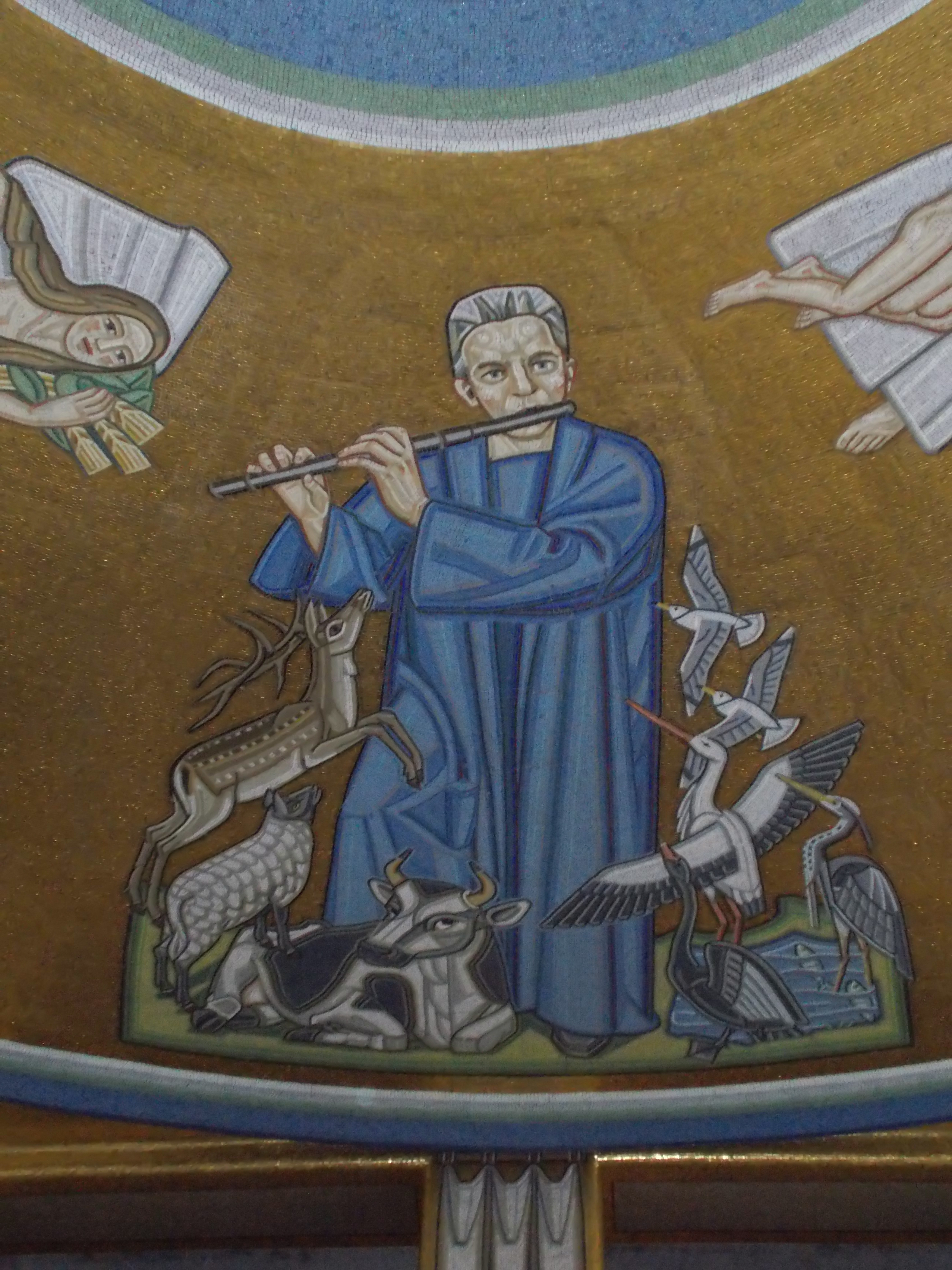
Carl Nielsen as Orpheus (or Tamino?): ceiling mosaic adjacent to the Royal Theatre, Copenhagen.

Carl Nielsen as Orpheus (or Tamino?): ceiling mosaic adjacent to the Royal Theatre, Copenhagen.

My article for The Amati Magazine about last week’s Carl Nielsen anniversary events in Copenhagen and Odense is now live. And – after a hectic week and a couple of false starts, I am now going to review Longborough Festival Opera’s new production of Tristan und Isolde tomorrow. So, if you’ll excuse me while I iron clothes, plan picnics, try to remember how to tie a tie, etc…

Birmingham, Stratford and Funen

Tags

, , , ,

010

The Birmingham Post seems to have overcome its late difficulties with posting reviews – so here are my most recent: Birmingham Conservatoire’s baroque double bill, an interesting programme from the Orchestra of the Swan and Raphael Wallfisch and Welsh National Opera’s production of Richard Ayres’ Peter Pan. And the latest of my articles about favourite classical music books is now up on Amati Magazine – not for the faint-hearted!

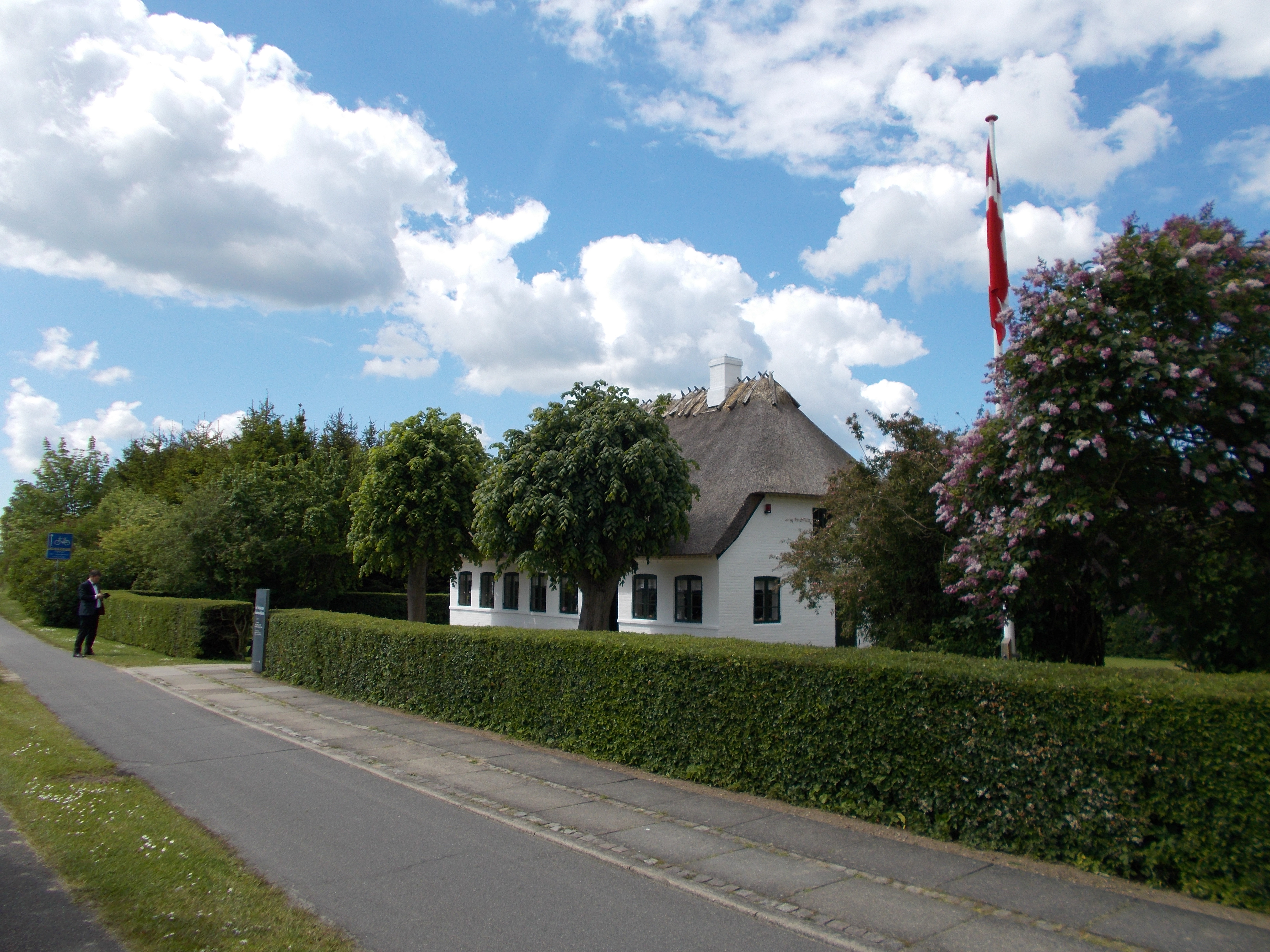
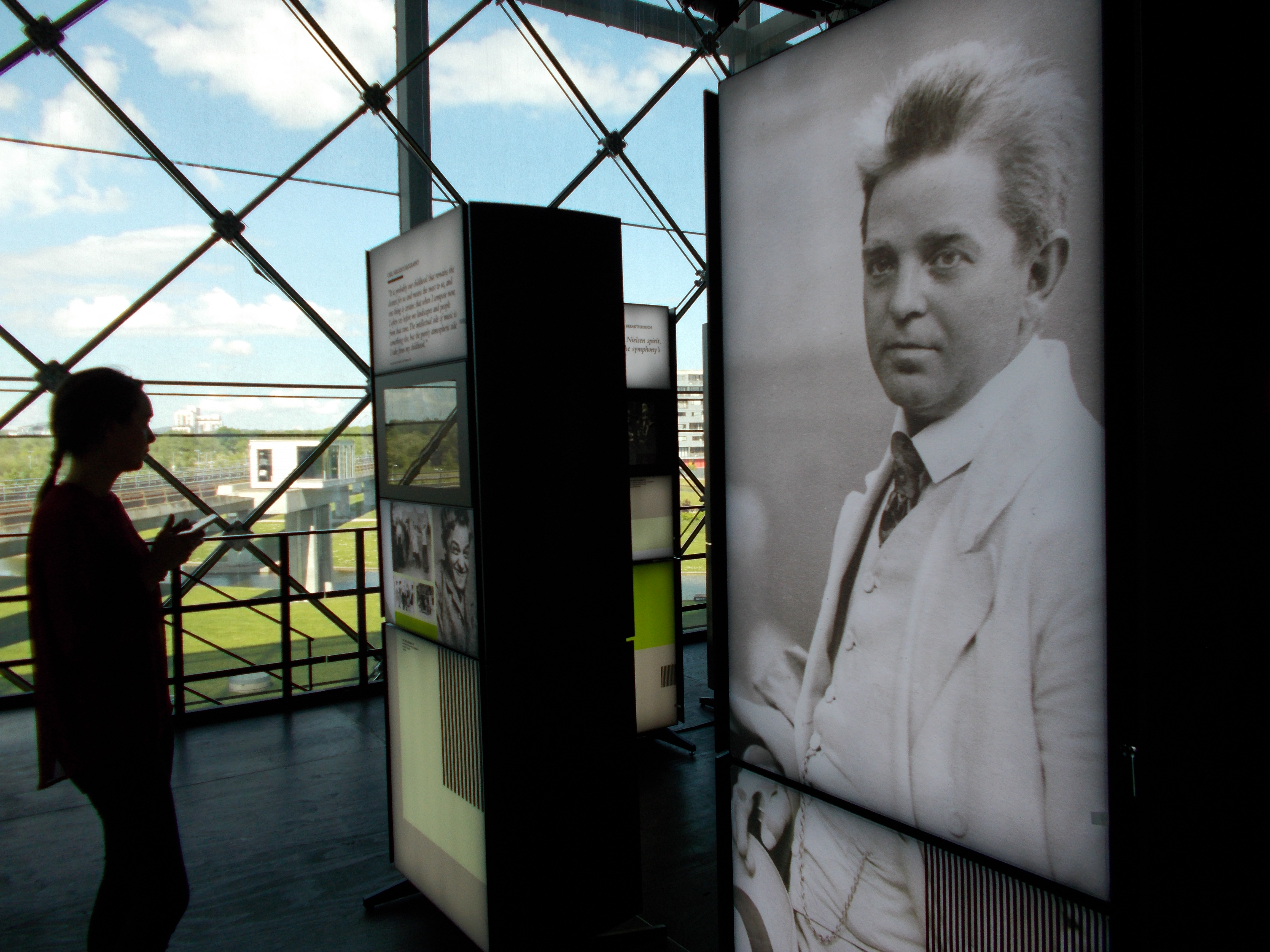
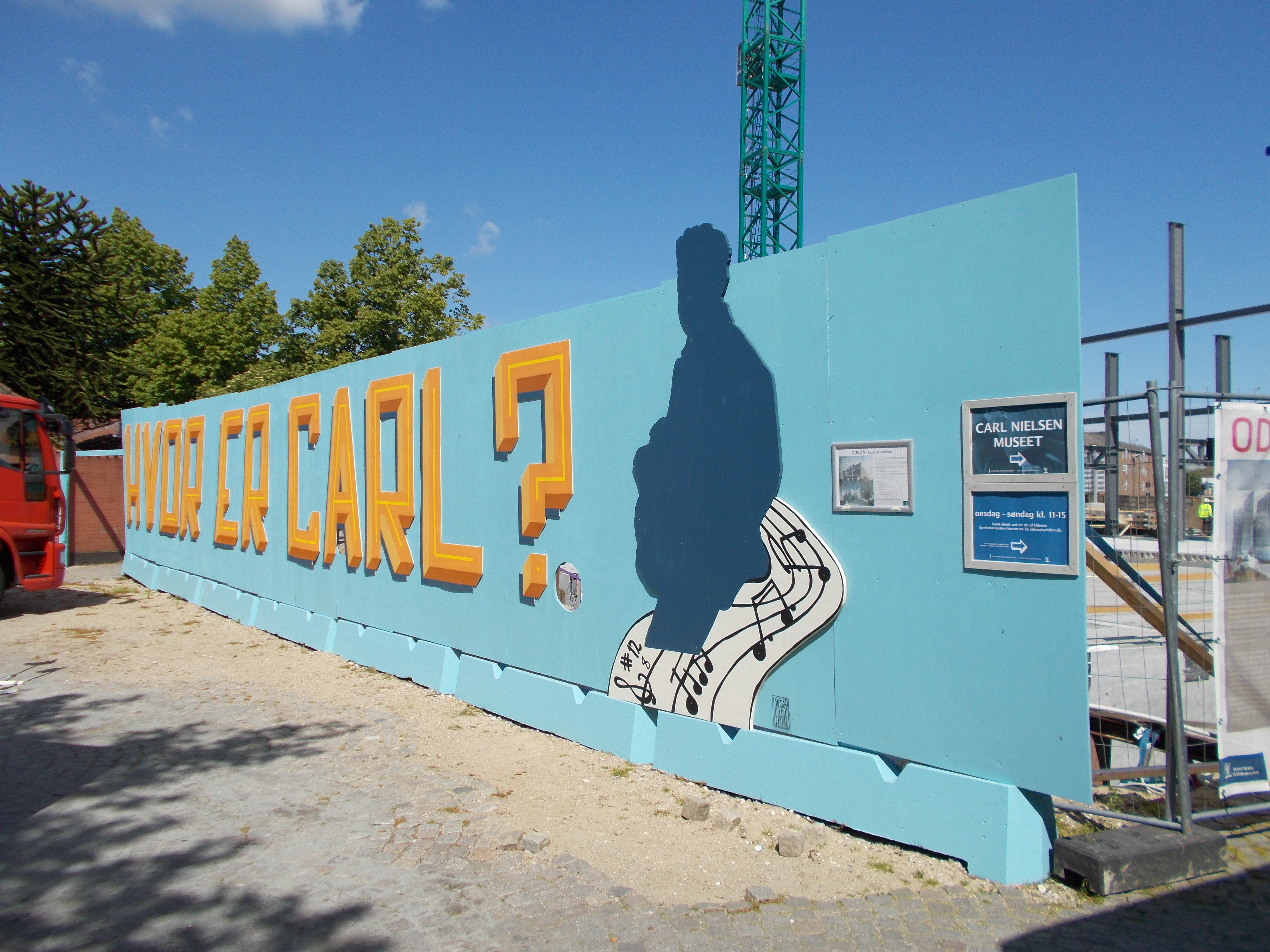
As for my big Nielsen anniversary jaunt to Denmark – watch this space. Here’s a couple of pictures for starters. And have a look at this lovely blogpost from my esteemed colleague David Nice – who was wonderfully congenial company as we explored Copenhagen and Nielsen’s “home patch” around Odense on the island of Funen.

023008

Throwback Thursday: Tristan und Isolde at 150

Tags

, , , , ,

I won’t get to review the new Tristan und Isolde at Longborough this summer, and I didn’t get to review Welsh National Opera’s most recent either. Same problem in both cases – the senior critics snaffle all the plum gigs (and plums don’t get much juicier than Wagner at Longborough). I only know that – based on what I saw of the 2013 Longborough Ring Cycle – it’ll be extraordinary. Michael Tanner once told me that in his view, Longborough embodies the spirit of Bayreuth more than Bayreuth itself, these days.

Meanwhile, here’s something I did write about Tristan for Metro, in 2006 – WNO’s revival of Yannis Kokkos’ 1993 production. Mark Wigglesworth conducted, and in light of his subsequent appointment to ENO, I think what he had to say then is still of some interest.


“Since I have never in my life known the true bliss of love, I will raise a monument to this most beautiful of all dreams – in which, from first to last, love shall be completely fulfilled”. Say what you like about Richard Wagner – he was a man of his word. In Tristan und Isolde, his 1865 re-telling of the Celtic legend of Sir Tristram and Princess Yseult, Wagner created a love story so overwhelming that even he started to wonder whether he’d gone too far: “Only mediocre performances can save me – good performances will drive people mad!”

So perhaps Welsh National Opera’s Tristan und Isolde should carry a health warning. Conductor Mark Wigglesworth certainly has some sympathy: “It gets inside you, more than any other music. It’s bad for your health!” And he should know. The buzz about this revival of Yannis Kokkos’ 1993 production is coming from a pair of remarkable young Wagnerians. One is Annalena Persson (Isolde) – the Swedish soprano who stole last season’s WNO Flying Dutchman from under Bryn Terfel’s nose. And the other – conducting Tristan for the very first time – is Wigglesworth himself.

Though it’s not his first brush with Wagner. Wigglesworth conducted The Mastersingers of Nuremberg at Covent Garden in 2002. Good training? “No – It’s absolutely no use to Tristan”. Because this opera, he explains, is a very special case indeed. “Mastersingers is a very human piece, with lots of action and genuine historical characters. Tristan is much more difficult – you’re relating to the emotions rather than the characters. Even though it’s shorter than Mastersingers, the sheer intensity that you need to maintain over the whole evening is incredible. I expect it to be much more draining”.

And it turns out that Wigglesworth has, after all, been in training for the challenge. “Starting early is the best thing. I started work two years ago – though you can’t really get to grips with the structure until you’re rehearsing full acts”. But you can begin to immerse yourself in the extraordinary emotional and philosophical world of this huge work. Tristan’s plot – an eternal love-triangle – is deceptively simple. But Wagner, as he wrote the opera, was embroiled in a passionate affair, not just with a friend’s wife, but with the writings of Arthur Schopenhauer. It’s this philosophical dimension that lifts Tristan’s central love story onto a cosmic level.

Wigglesworth’s done his homework. “As a conductor, I have to be interested in the drama – I can’t make a musical decision divorced from the dramatic situation. The idea of just conducting the orchestra is impossible for me.” And he likes what he sees on stage – “I first saw Kokkos’ production back in 1993. It just tells the story; it’s very simple. It’s not a Konzept production, with a capital K”. That’s important for him. “A lot of directors hide behind complex ideas. You can get a bit bogged down, and forget that this is a great story with extraordinary music. Our job is to tell that story.”

But how – practically – do you tell a story that begins with a cry of longing and ends, nearly four hours later, in a quarter-hour musical orgasm? For Wigglesworth, the secret’s in the pacing. “From the very first note, it flows right through to the very last note. It fulfills itself, musically and emotionally, only at the very end” he explains. “You don’t want to peak too early!”

Four hours of deferred ecstasy – no wonder some listeners find Tristan und Isolde slightly more than they can bear. And yet Wigglesworth can’t contain his enthusiasm: “Wagner was just the most extraordinary musical genius we’ve ever had – even more than Mozart”. So it’s worth it? “Tristan’s the greatest love story.  Ever. And it’s told in the most romantic music. Ever. It can transform you”. There’s your answer. Why listen to Tristan und Isolde? Well, why fall in love?
Review: Orchestra of the Swan – Dobrinka Tabakova premiere

Tags

, , ,

The Birmingham Post isn’t always able to post online everything that I’ve written for its print edition, so – after a suitable time lag (you should really go out and buy the paper!) – I’ll be posting my recent reviews here. As per the print edition, they’re all fairly concise – just 250 words. This is of a performance at Stratford Arts House on 22nd May 2015.


Immediately before the world premiere of her new work High Line, Dobrinka Tabakova thanked conductor Davd Curtis and the Orchestra of the Swan for having the courage to programme an entire half-concert of contemporary music. And whether the large crowd was there principally to hear Tabakova’s music or Fauré’s Requiem, the way Curtis and Tabakova introduced High Line – a friendly discussion, illustrated with brief examples from the orchestra – was a masterclass in getting a potentially reluctant audience on side.

High Line itself – a musical picture of the famous New York park, with solo violin (Tamsin Waley-Cohen, making a sumptuous sound) and flugelhorn (Hugh Davies, relaxed and effortlessly jazzy) – drew a warm response. Distantly evoking Copland’s Quiet City, it’s an attractive score, perhaps slightly longer than its material could sustain, but nonetheless a strong contender for pole position in the not-exactly-crowded field of concertos for violin and flugelhorn.

Earlier we’d heard Tabakova’s Centuries of Meditations, a choral setting of Thomas Traherne originally composed for the 2012 Hereford Three Choirs Festival. Like John Adams in Harmonium, Tabakova generates a slowly-building sense of rapture over shimmering minimalist figuration. The excellent Orchestra of the Swan Chamber Choir sang with glowing fervour.

They brought the same conviction and beauty of sound to Fauré’s Requiem, in its original, viola-led scoring for chamber orchestra. Simon Oberst and Naomi Berry took the solos from within the choir: Berry’s dark-hued soprano and expressive vibrato made the Pie Jesu a more emotionally-charged experience than we’re used to. Slightly more nuanced phrasing from the orchestra might have lifted this performance from highly enjoyable to truly memorable.

Happy 150th birthday, Carl Nielsen.

Tags

,

041

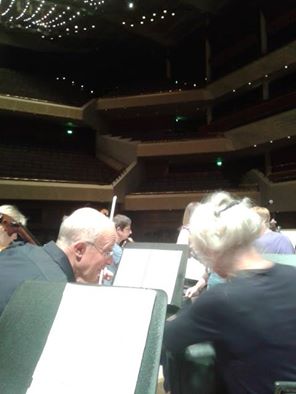
…and I’m fortunate enough to be spending it with a terrific group of colleagues in Copenhagen itself, on assignment for The Birmingham Post and The Amati Magazine. We’ve heard a rehearsal of the 4th Symphony with the Danish National Symphony Orchestra in its stunning new concert hall, been shown round Nielsen’s old stamping-ground at the Royal Theatre by the wonderfully friendly and knowledgeable Michael Schonwandt, and tonight it’s David Pountney’s new production of Saul and David at the opera. Off to the great man’s birthplace near Odense tomorrow.

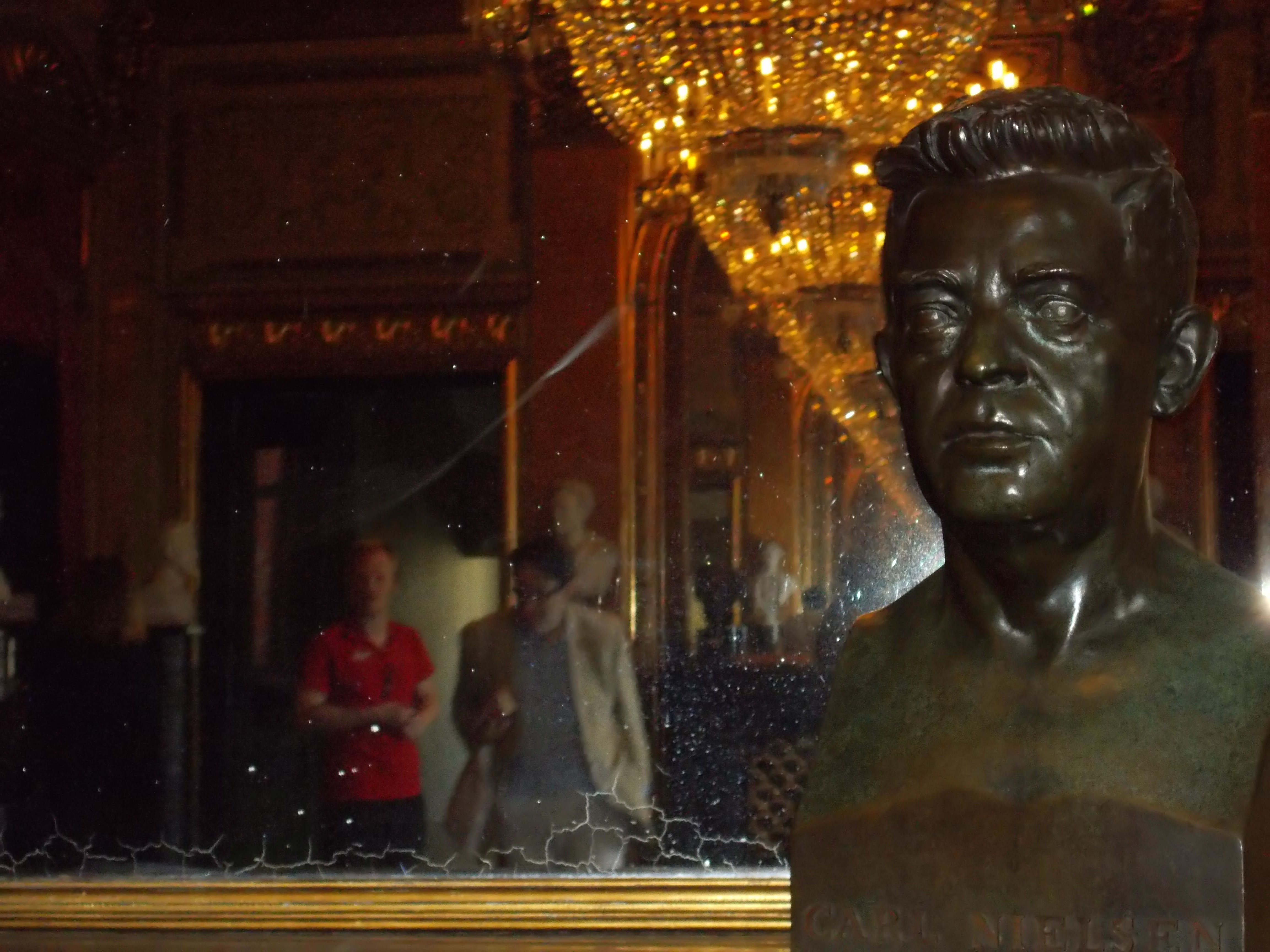
Full reports follow presently. Meanwhile the sky is blue, the Carlsberg is ice-cool and here’s the birthday boy himself in the foyer of the old Royal Theatre, looking remarkably spry at 150.

Review: Sinfonia of Birmingham & Michael Seal

Tags

, , ,

The Birmingham Post isn’t always able to post online everything that I’ve written for its print edition, so – after a suitable time lag (you should really go out and buy the paper!) – I’ll be posting my recent reviews here. As per the print edition, they’re all fairly concise – just 250 words. This is of a performance at Sutton Coldfield Town Hall on 18 May 2015.


There’s more than one great conductor / orchestra partnership in Birmingham. Michael Seal has been principal conductor of the Sinfonia of Birmingham since 2002, and they’ve grown together. To hear them is to experience something that’s rare even with professional orchestras: a conductor who knows exactly how to get the best from his orchestra, and a band that knows exactly how to respond. We’ve heard things from this team at Sutton Coldfield that, for pure musicality and communicative power, have far outstripped certain big-name concerts at Symphony Hall.

Those thoughts followed naturally from a performance of Nielsen’s Four Temperaments symphony that seemed to make every one of those points: taut, powerful and ebullient, yet with moments both of lyrical sweetness and real danger. Seal found space for detail, and to let his players sing (the Sinfonia has a wonderfully characterful woodwind section) while still maintaining the long line of the symphony’s architecture and propelling the music forward. The third, “melancholic”, movement grew imperceptibly from expressive oboe and cor anglais solos to two positively volcanic climaxes: the Sinfonia’s low brass made the floor shake.

Earlier, we’d heard violinist Charlotte Moseley in Tchaikovsky’s Violin Concerto; an accomplished, energetic performance with a big heart – the tone of her lower strings as she duetted with the clarinet in the Canzonetta was particularly treasurable. And Sibelius’ Finlandia grew as if in one single phrase from snarling opening to defiant finish. The last time we heard it done so convincingly, the conductor was Sakari Oramo.

Throwback Thursday: To slate or not to slate?

Tags

,

This is a review I wrote for the Lichfield Mercury in 2009 – a guitar recital by someone who billed himself as a seasoned pro. Within a few minutes it became clear that he was nothing of the sort. I can only assume he’d hired the venue as a vanity project, perhaps with the encouragement of well-meaning friends. The only thing that made it bearable was the fact that – to all appearances – he seemed entirely unaware of just how badly he was playing.

I’d committed to write the review, and he was enthusiastically expecting it. (I don’t know if he ever read it: soon afterwards he asked me to be his Friend on Facebook, so I can only assume not.) But I didn’t want to be completely frank – he was clearly playing in good faith, and no-one’s in this business to be gratuitously cruel. Plus, at that point in time the Mercury subs simply cut out any negative comments. This is what I wrote in the end – I’ve changed his name.


Andrew Shilling’s solo guitar recital at the Lichfield Garrick Studio was billed as “From Paris to Buenos Aires”. Beginning in Napoleonic Paris, the programme finished in the twentieth century with two preludes and a Choro by Heitor Villa-Lobos, taking in Tarrega’s evergreen Recuerdos de la Alhambra along the way. It looked an attractive evening – on paper, at least.

The reality was toe-curlingly different.  From the very first notes of the first work – Antonio Nava’s four winsome “Seasons” sonatas – it was clear that something was badly wrong. Halting, fumbling, head buried in the score, Mr Shilling played as if he was seeing these pieces for the first time. Pushing on at a near-uniform volume and tempo, his performances of Ferdinando Carulli’s Solo Op.20 and Dionisio Aguado’s Fandango Varié were so garbled as to be unrecognisable.

Mr Shilling seemed slightly more at ease after the interval, and there were occasional flashes of confidence – even character – in his performance of Máximo Pujol’s first Suite del Plata. But even this was disfigured by the same faults that marred almost every bar of this concert: mis-struck chords, faulty tuning, trapped strings buzzing harshly, and a sense of rhythm that was vague to the point of non-existence. Quite simply, and with the best will in the world, this was not the performance of a professional artist – or even a competent amateur.

It was hard to know what to think, though the (roughly) one third of the audience who left at the interval had obviously made up its mind. The most charitable interpretation is that Mr Shilling was suffering from nerves. The sensation of fingers suddenly ceasing to obey mid-performance; of what went right in rehearsal inexplicably going wrong, is sickening for an artist, and no-one who’s ever performed in public would treat it lightly.

Nonetheless, a professional musician needs to confront and overcome this problem before they step on stage. Mr Shilling is by all accounts a well-respected guitar teacher, and his love for his instrument seems sincere. But this performance should never have been put in front of a paying audience in a professional venue.

Resurrection

Tags

, , ,

1 Bridgewater 2

No reviews this weekend – here’s what I was doing instead. I’ve been playing  on and off with the Wrexham Symphony Orchestra since 1997. I love them not just because they’re a friendly bunch but because they have such a thirst to explore the repertoire – to “have a go”. They play music that excites them, and there are no finance managers, critics or jaded pros there to tell them that amateur orchestras can’t play Mahler 3, Nielsen 1, Prokofiev 7 or Bruckner 5; or Paul Creston, Bernard Herrmann, Lars Erik Larsson, Alun Hoddinott or Jean Francaix. So they just play it, and I’ve had some of the best musical experiences of my adult life at the William Aston Hall. I’m always frustrated when work or travel (it’s a bit of a trek from Lichfield to Wrexham) causes me to miss a show.

1 wrexham

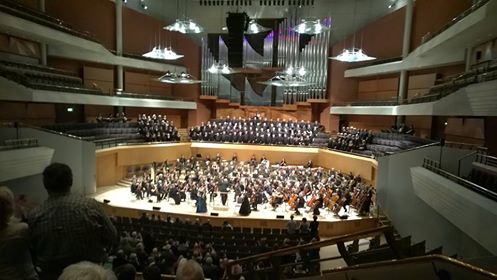
But there was one concert that I was determined not to miss – the Resurrection Symphony, the highlight so far of the Orchestra’s 10-year Mahler cycle. For the occasion, the orchestra had hired the Bridgewater Hall, Manchester – the biggest and most high-profile venue it’s ever played in – and teamed up with no fewer than four Cheshire and North Wales choral societies. Richard Howarth – formerly of the Manchester Camerata – conducted.

1 Bridgewater

So there I was, at the back of the cello section, as astonished as anyone in the orchestra by the transformation that the Bridgewater Hall acoustic wrought on our sound and quietly relieved that after a week of rehearsal, my creaky fingers were finally starting to produce something resembling Mahler’s cello part. It was a welcome reminder, too, of the unique perspective that you get on a piece of music once you’re on the inside, as it were – actually playing it.

It’s incredible how clearly the form of the piece simply lays itself out in front of you as you play – and the details you notice. I was shocked at just how lazy my listening had become. When, in listening to the first movement, had I ever genuinely noticed the passage where Mahler semi-quotes (or at any rate, evokes in unmistakable terms) first Die Walkure, and then Tristan? And later, a huge subito piano tutti clearly cribbed from the end of Gotterdammerung? There they all were, jumping off the page at me as, with one eye on the baton, another on the semiquavers on the next line, I struggled not to run out of bow.

As for the performance itself – it’s hardly my place to say. But I can say that the two soloists, Rebecca Afonwy-Jones and April Fredrick both sent little tingles running down my back, that I’ve never heard an amateur choral society with so many, and so sonorous, male voices…and that backstage, post-show, we were already talking about “when” we do Mahler 8…

Review: Raphael Wallfisch & Orchestra of the Swan

The Birmingham Post isn’t always able to post online everything that I’ve written for its print edition, so – after a suitable time lag (you should really go out and buy the paper!) – I’ll be posting my recent reviews here. As per the print edition, they’re all fairly concise – just 250 words. This is of a performance at Birmingham Town Hall on 13 May 2015.


“Revelatory” is how the Orchestra of the Swan describe the reduced version of Dvorak’s Cello Concerto that they performed with Raphael Wallfisch in this final concert of their 14-15 Town Hall series. Hopefully they won’t take it as a criticism if we don’t go quite so far. This was no Schoenberg-style re-imagination; simply the standard version with the timpanist doubling on triangle and the brass section slightly pruned, the better to balance a chamber-orchestra string section.

On its own terms, it worked pretty well: for much of the piece, you’d have been hard-pressed to spot the difference. There was a noticeable increase in transparency; conductor David Curtis went for no-nonsense tempi and crisp articulation. Whether that’s the best way to find the heart of this most romantic of all cello concertos is a matter of personal taste; but it certainly brought some wonderful moments. It’s hard to imagine a full orchestra allowing Wallfisch to sing his first statement of Dvorak’s glorious horn theme (surely the greatest single melody he ever wrote) quite so exquisitely dolce.

And if anything was revelatory about this concert, it was the sheer beauty of Wallfisch’s playing – dignified but gentle, eloquent without ever sounding forced; lit by an inner glow. He played the opening melody of Dvorak’s Silent Woods in one breathless phrase, and in Dvorak’s Rondo Op.94 his tone seemed to float over the bustling orchestra. These were wonderful foils to the exuberant, explosive account of Mozart’s Prague symphony with which Curtis, in an inspired choice, had opened the concert. Wallfisch’s playing placed these two neglected miniatures on a comparable plane of inspiration.

Throwback Thursday: To see or not to see…Ludovico Einaudi

Tags

,

One of the most fun things about writing for Metro was formats like this: basically a license to sharpen your claws against a certain subject. If it came out looking even-handed, you’d failed. “The readers like a bit of attitude”, the editor told me. This was for an appearance by the Clayderman de nos jours in Birmingham in 2007, and since the editor at the time was my girlfriend, I thought I could probably get away with pushing it a bit. I don’t think she knocked it back…


To see or not to see: The Pros and Cons of Ludovico Einaudi

Pro:  As a student of the great Italian composer Luciano Berio, Einaudi’s classical pedigree is beyond question. But unlike most contemporary composers, he actually sells records.

Con:  The Crazy Frog sold records. Einaudi’s success in the UK comes from his exposure on Classic FM – a station for people who find Saga Radio slightly too cutting-edge. And while Berio smashed the boundaries of contemporary music, Einaudi’s the musical equivalent of a scented candle.

Pro: From Philip Glass to Michael Nyman, Minimalism has long been the accessible face of contemporary classical music.  Einaudi simply brings it to the masses.

Con: OK, so less is more – but this much less? Minimalist masters like John Adams and Steve Reich tackle themes like 9/11 and the Holocaust, and their music never shies away from harsh sounds and strong emotion.  Einaudi’s inspirations include “waves”, “the most beautiful sunset” and a “lovely warm summer night”. It’d insult the intelligence of a pre-school recorder class.

Pro:  Einaudi’s always expanding his musical language. He’s collaborated with an Armenian folk musician, harpist Cecilia Chailly and – on his current tour – German electro-experimentalists To Rococo Rot.

Con: Somehow Einaudi makes them all seem just as bland. His endless, foursquare piano noodling reduces even the most interesting fellow-performers to ambient backing sound. Aural wallpaper? Einaudi’s musical Mogadon isn’t as exciting as that.

Pro:  He’s the most successful living Italian composer – the heir to Rossini, Verdi and Puccini.

Con:  That’s true – a situation that critic Norman Lebrecht has described as “a calamity of unprecedented cultural magnitude”.  Hum Nessun Dorma. Now hum something by Einaudi.  Can you?

Pro:  It’s just lovely and relaxing.  What’s so wrong with that?

Con:  Nothing – and if you’ve been hankering for a 21st century Richard Clayderman, Ludovico Einaudi is the answer to your prayers.