So that was January…

Tags

, , , , , ,

105

Bit of a jolt to notice the date – and I realise I’ve been rather quiet on here this month. It’s not that I haven’t been up to anything; it’s that I’ve had my hands gratifyingly full – this is peak season for copywriting and some of my best clients have been launching some very exciting projects, which tends to keep me busy.

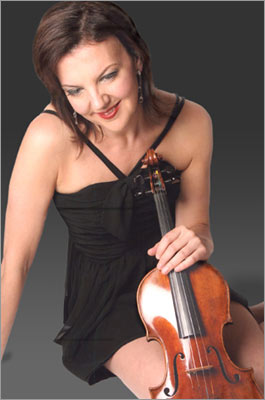
My pre-Christmas review of the Royal Opera’s Eugene Onegin appeared in The Spectator a couple of weeks back, and next week I’ll be reviewing Mozart revivals at Opera North and English National Opera. I wrote a piece for The Arts Desk on the CBSO’s thinly-veiled public audition of Mirga Grazinyte-Tyla; whether or not (as many audience members and all the critics in Birmingham are hoping) they offer her the vacant music-directorship (and the CBSO players have strong opinions of their own, often far-removed from what audiences and critics think), I’m in no doubt that she’s a hugely impressive and serious artist, with musicality just streaming out of her fingertips.

Omer Meir Wellber seems to be regarded as another front-runner: he’s a strikingly intelligent artist with something powerful to say (qualities not always valued in the UK), and would also be a fascinating appointment. At least that’s how it sounds from the stalls. The players may feel differently, and if we suddenly heard that either Nicholas Collon or Andrew Gourlay was the anointed one; well, that’d be no bad thing either. But a lot of the rumours that are floating around are transparently nonsense (when dealing with Birmingham, you can generally discount any speculation that originates in London): we’ll just have to wait and see.

Meanwhile, I’ve been delighted to acquire some new clients since the New Year: including the Halle, the Yehudi Menuhin International Violin Competition and Gramophone hugely excited to be working for them.  I’ve also been working on sleeve notes for Warner Classics’ next Rattle / CBSO box set – an enjoyable pretext to catch up with my old colleague Peter Donohoe, who always has something thought-provoking to say. I popped up to Liverpool and saw the astonishing backstage transformation of my favourite concert hall in the world, the beautiful Philharmonic Hall. I wrote a concert script for Margherita Taylor – fun job. And there was a substantial programme note for a major concert at the Wigmore Hall – something to really get my teeth into.

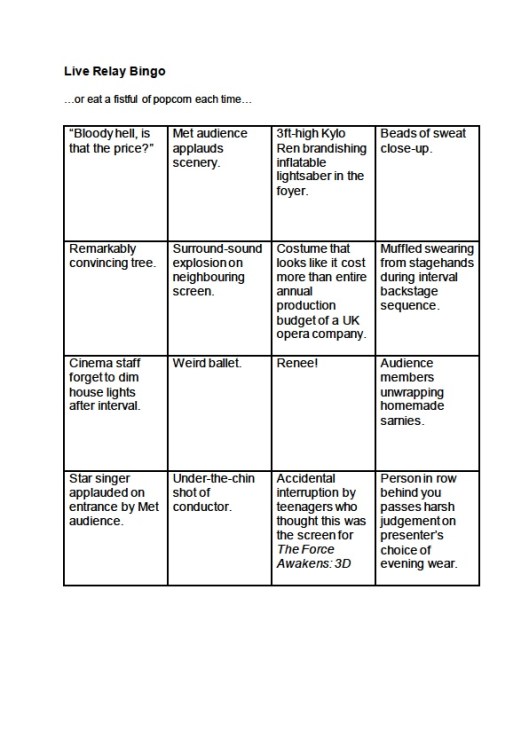
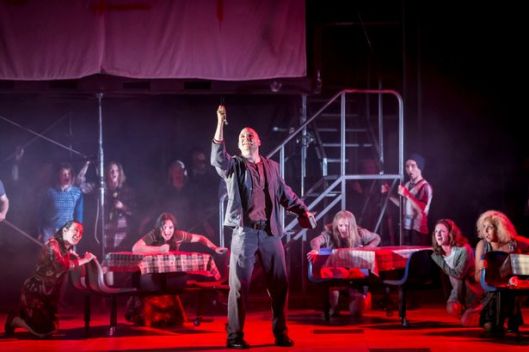
And purely for pleasure, we took in the live New York Met cinema relays of The Pearl Fishers and Turandot (eye-popping) – the baristas at the Tamworth Odeon branch of Costa are starting to recognise us – and drove over to Sheffield for the last night of The Crucible’s production of Show Boat, a musical I’ve wanted to see on stage for a very long time.

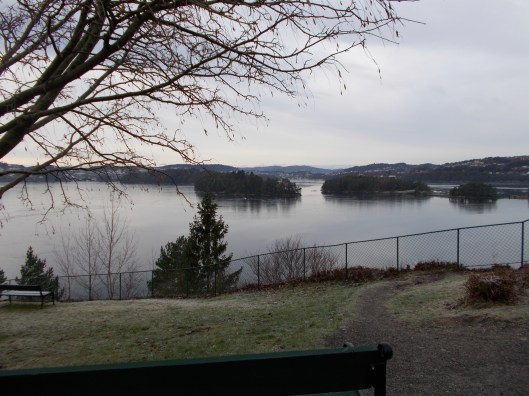
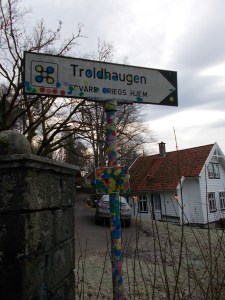
Seems a very long time since we were in Bergen for new year, clambering around Grieg’s house at Troldhaugen – closed and completely deserted, and somehow all the more magical for it – on a clear but icy Norwegian morning. By pure coincidence, I was writing about Grieg’s C minor Violin Sonata as soon as I returned. He’s a composer I can’t help loving, and the more I listen, the more fascinated – and moved – I am by his music. I’d like to have the chance to write more about him – anyone..?
107

Review: Birmingham Philharmonic Orchestra

Tags

, , ,

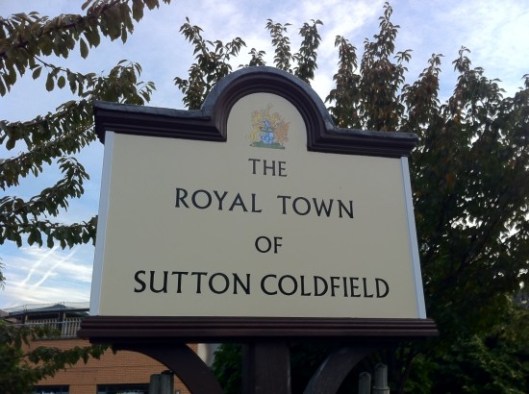
The Birmingham Post isn’t always able to post online everything that I’ve written for its print edition, so – after a suitable time lag (you should really go out and buy the paper!) – I’ll be posting my recent reviews here. As per the print edition, they’re all fairly concise – just 250 words. This is of a performance at Sutton Coldfield Town Hall on Sunday 17 January.

I voted for Delius’s On Hearing the First Cuckoo, by the way. Someone had to.


Sutton Coldfield

Light music is a vanishing art. Any student conductor these days can thrash out a passable Mahler symphony: but finding the sort of dapper, carefree sparkle that Thomas Beecham used to bring to Suppé overtures, or pieces like Ponchielli’s Dance of the Hours, is a lot harder.

Both Suppé (an enjoyably brisk Light Cavalry overture) and Ponchielli featured in this enjoyable programme by the Birmingham Philharmonic Orchestra under Michael Lloyd; plus Sullivan’s Overture Di Ballo and Eric Coates’s London Suite. It’s the sort of music that’s usually carelessly described as “popular”: but can you remember when, say, the CBSO last played the ballet music from Gounod’s Faust? Me neither.

In any case, you got the distinct impression that the BPO – 75 years old in 2016 – saw this concert as a sort of early birthday present to itself. Audience and orchestra members took turns to vote on certain items in the programme: the audience opted by a landslide for Nimrod, while the orchestra went, slightly unimaginatively, for the finale of Dvorak’s Ninth. Still, they clearly know their strengths: this and the other conventionally “serious” piece – Saint-Saëns’ Danse Macabre, stylishly shaded, with gutsy fiddle solos from leader Cristinel Băcanu – were the two items in which the BPO seemed most at ease.

Elsewhere: well, Sutton Coldfield Town Hall’s carpet-showroom acoustic is merciless to violins. It might perhaps have been safer to have opened with the Suppé rather than the Sullivan. But the Ponchielli fizzed nicely, and elegant cello and sax solos added a touch of West End glamour to the London Suite. Lloyd’s Knightsbridge March zipped along like a military two-step, helped by some deliciously alert and musicianly percussion playing. But folks, please: leave the bottled water offstage.

Victor Hely-Hutchinson’s Box of Delights

Tags

, , , , , ,

I first published this post about a forgotten giant of Birmingham musical life and his solitary, much-loved seasonal masterpiece a few years ago, and I reposted it last Christmas. It always seems to draw a reasonably lively response, so in the spirit of the season, I hope you’ll forgive me for putting it up again. Happy Christmas, folks!


So here it is, Merry Christmas, and we have it on unimpeachable authority that everybody is having fun. Forgive me: I lived in Wolverhampton for eight years (well, it was good enough for Percy Young) and Noddy Holder is like a god there.

I’m not the world’s greatest fan of seasonal pop music. But I am, however, a fan of Victor Hely-Hutchinson’s A Carol Symphony – a work with a deep connection to the English Midlands, and not just through its association with successive dramatisations of The Box of Delights. Here’s a blogpost I wrote in 2009 about the music and its (largely forgotten) composer. When it was first published I was delighted to receive a charming and kindly email from the composer’s then-78 year old son Christopher, who was living in Ludlow. Hopefully he still is.
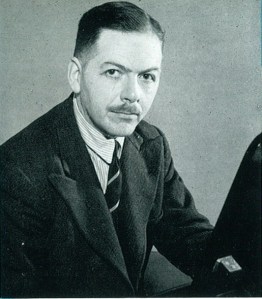

Hely-Hutchinson

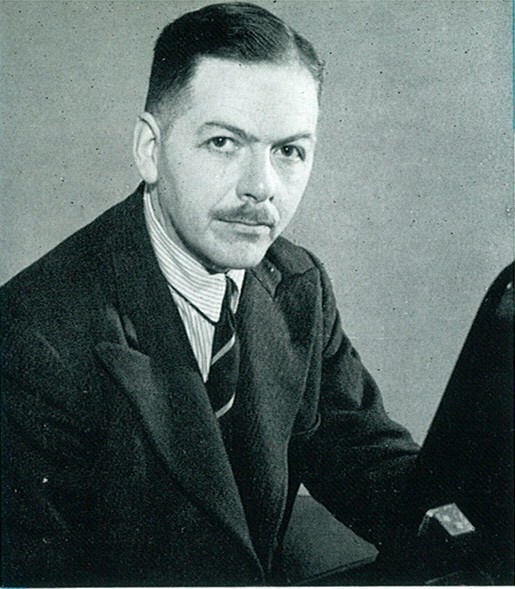
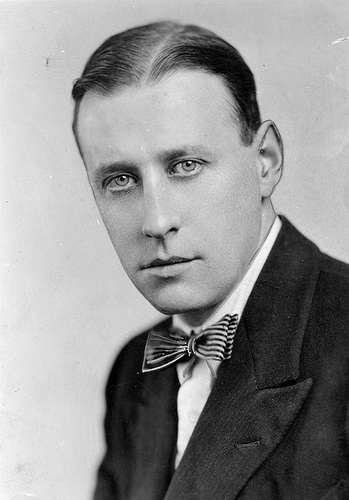
Victor Hely-Hutchinson (1901-1947)

When I was 11, my younger sister and I were both captivated by the BBC’s TV adaptation of John Masefield’s The Box of Delights. She liked the fantastic story, and the Christmassy atmosphere; I liked the steam trains. But one thing that we both loved, and which seemed to capture the whole wintry magic of the thing, was the signature tune – which we could tell, even then, was “proper” music, not just a typical children’s TV theme (this being the early 1980s, the lack of synthesizers was the giveaway). Here’s that title sequence in full (warning, unseasonably noisy Youtube advert may play first!).

I asked my father if he knew what it was – not realising that a pre-war radio dramatisation of The Box of Delights, with the same music, had become a seasonal classic for an earlier generation. Or that my father – at much the same age – had asked exactly the same question. He pulled out a Classics for Pleasure LP with a snowy landscape on the cover. The piece on it was called Carol Symphony, and the composer was Victor Hely-Hutchinson.
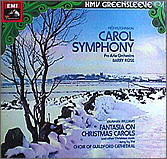
Carol Symphony cover 1

Sleeve art the way it used to be.

The record-sleeve told us that he’d been born on Boxing Day 1901, and had been Regional Director of Music for the BBC in Birmingham. It wasn’t very easy to find out much more back then, but it is now, and for the full story, there’s an excellent online biography by his son John. In short, Christian Victor Hely-Hutchinson was born in Cape Town, studied music with Charles Villiers Stanford and Donald Tovey, and at the age of 12 played a Mozart piano concerto with the LSO. In 1933 he landed the Birmingham job, and rapidly involved himself with every part of the city’s musical life – not least the 13-year old City of Birmingham Orchestra and its then music director Leslie Heward.

Hely-Hutchinson never held an official post with the CBO – but he was a tireless supporter of the Orchestra throughout the 1930s and 40s. The CBSO’s performance record-cards from that period are dotted with the initials VHH – indicating that he’d written the programme notes for a particular work. He gave pre-concert lectures (he took a doctorate in 1941, though he’d held the Chair of Music at Birmingham University since 1934). He appeared as piano soloist with the orchestra, notably in Mozart concertos, and in 1944 he performed his own rhapsody The Young Idea (intriguingly subtitled “cum grano salis”) with George Weldon conducting. It’s recently been recorded by Dutton.

And he did it all with consummate professionalism. The CBO’s manager Gerald Forty (of the piano-makers Dale, Forty) remembered that:

His quiet confidence was most reassuring. I see him in my mind’s eye, sitting at my desk. He knocks out a half-smoked pipe, his inseparable companion: fills it, lights it, takes a few puffs – finds it won’t draw – scrapes it out, refills it, wastes more matches – and so on da capo. While my ashtrays were being filled, his mind was concentrated on the matter at hand, and with a remarkable economy of words, he stated his views and recommended a solution.
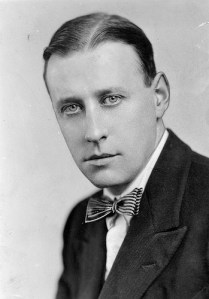
Leslie Heward

Leslie Heward

But it was during wartime that Hely-Hutchinson gave his greatest service to the CBO. In early 1940, while working as a volunteer Air Raid Precaution warden, he performed (from memory!) a complete cycle of Beethoven Piano Sonatas at the Birmingham and Midland Institute – in aid of Orchestra funds. Meanwhile, he corresponded regularly with Leslie Heward, then recovering in Romsley Sanatorium from the TB which was to kill him just three years later. When Heward died in May 1943, Hely-Hutchinson rallied to the support of the CBO. As Forty recalled:
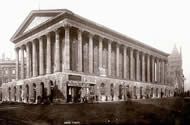
birminghamtownhall

Birmingham Town Hall in wartime. Hely-Hutchinson took part in ARP fire drills on the roof.

The problem of finding another conductor at short notice and of maintaining a full complement of players with War staring us in the face, was one of extreme perplexity; but Victor solved it by the apparently simple expedient of doing the entire job himself – including the compiling of programmes, rehearsing the orchestra (which he did anonymously and gratuitously for many years), conducting the concerts and dealing efficiently and decisively with the innumerable emergencies…

Hely Hutchinson was initially unconvinced by Heward’s successor, George Weldon, but with typical fair-mindedness was happy to revise his opinion after Weldon had settled into the post a year or so later:

“I want to tell you how right I think you were about George Weldon – and by the same token, I was wrong – eighteen months ago” he wrote to a colleague in June 1944. “As a pure musician, I cannot think him the equal of Leslie, but then, practically nobody is, and some of George’s performances – notably of Mozart – made me feel that he has the root of the matter in him”.

The following year, Hely-Hutchinson was offered the post of Director of Music for the BBC in London, and swapped his home near Droitwich for one in St John’s Wood. But he remained a familiar face in Birmingham music, and there was genuine shock in the city in March 1947 when the news arrived that he had died of pneumonia, aged just 45. The CBO paid its own tribute three weeks later, when Weldon conducted the first performance of Hely-Hutchinson’s recently-completed Symphony for Small Orchestra. (The concert was broadcast, and an incomplete recording survives in the CBSO archive).

Somehow, in this short but full musical life, Hely-Hutchinson found time to compose around 150 original works. The best known (by a country mile) is the Carol Symphony, from 1927, but there’s also an irresistible setting of Old Mother Hubbard “in the style of Handel”, which amusingly skewers the absurdities of baroque vocal style; and two shorter works, the Overture to a Pantomime and The Young Idea. Both have recently been recorded. They all show superb craftsmanship, a masterly ear for orchestral colour and a warm, thoroughly engaging sense of musical humour. They’d all merit an outing in the concert hall.

But the Carol Symphony has never quite left the repertoire (the most recent Birmingham performance was in December 2000). Far more than a mere seasonal medley, it’s actually a lovely and very English folk-song sinfonietta in four movements, in the spirit of Moeran, Vaughan Williams and John Ireland.

It’s packed with good things: the bustling mock-baroque figuration of the first movement (a sort of chorale-prelude on O Come All Ye Faithful), the jazzy, Walton-esque verve of the scherzo (God Rest Ye Merry); splashes of Handel, Elgar, and polytonal Stravinsky; the way Here We Come A-Wassailing trips in on the woodwind as the fugal finale bounds towards its grand, horn-trilling finish. And above all, that slow movement, in which Hely-Hutchinson sets the Coventry Carol to bleak, frozen harmonies that anticipate Vaughan Williams’ Sixth – and then, with dancing harp, muted strings and finally full orchestra, lightens our darkness with the gentlest and most enchanting setting ever made of The First Nowell.

A Box of Delights, indeed. Whatever else we remember him for, in the Carol Symphony Victor Hely-Hutchinson gave us something very special, and enduringly beautiful. Hely-Hutchinson’s CBO colleague and friend Gerald Forty, once more:

The Carol Symphony has become a standard Christmas piece for the City Orchestra: may it long continue to figure in those programmes as a reminder of the well-loved man to whom the City of Birmingham Orchestra and the Birmingham musical public owes so much.


Any copyrighted material is included as “fair use” for critical analysis only, and will be removed at the request of copyright owner(s).
One concert, two write-ups

Tags

, , , ,

Ex Cathedra candlelight by Neil Pugh 2

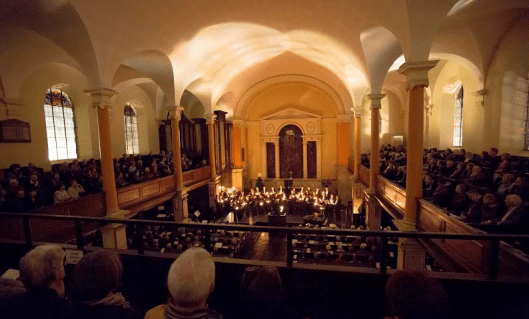
I’ve got two new reviews up today, both of the same concert. I knew that the annual Christmas Music by Candlelight concerts in Birmingham’s Georgian St Paul’s Church would be worth the effort: our Lichfield neighbour Jeffrey Skidmore never fails to come up with a programme that offers more than enough to write about, even with two completely different reviews to fill. So here’s the short review I wrote for the general readership of The Birmingham Post, and the more extended piece for the The Arts Desk.

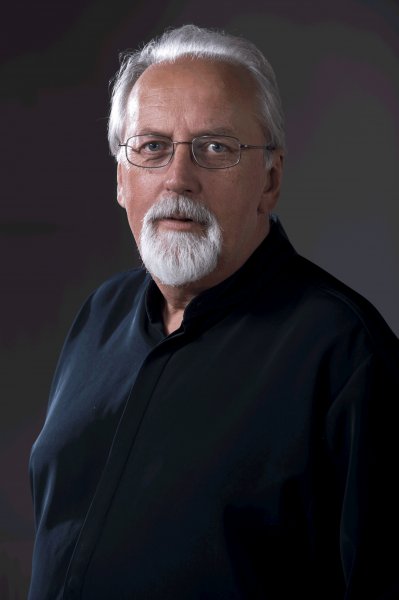
jeffrey skidmore-2012-credit-adrian-burrows

Jeffrey Skidmore – photograph by Adrian Burrows

As ever, I could easily have written another 1000 words for both – and that’s without describing the delicious mulled wine that we were kindly offered by the retired Ex Cath veteran who shared our pew!

Review: Birmingham Conservatoire Brass.

Tags

, , ,

The Birmingham Post isn’t always able to post online everything that I’ve written for its print edition, so – after a suitable time lag (you should really go out and buy the paper!) – I’ll be posting my recent reviews here. As per the print edition, they’re all fairly concise – just 250 words. This is of a performance at Birmingham Conservatoire on 4 December 2015.


Two questions arose from this Shakespeare-themed festive concert by Birmingham Conservatoire’s brass department. Firstly: with the Shakespeare 400th Anniversary nearly upon us, is it possible to hear too much of Walton’s music for Henry V? And secondly: seriously, Christmas? Already?

Well, with Victoria Square already full of seasonal sausage-vendors it’s too late to cry humbug. As Christmas concerts go, this was an imaginative programme, with Ian Porthouse and Andrew Stone-Fewings sharing conducting duties between the Conservatoire’s Symphonic Brass Ensemble and Brass Band. Alwyn Green’s new arrangement of Raymond Leppard’s brisk, playful setting of When Daisies Pied stood out for invention; soprano Cecily Redman delivered her “cuckoos” with an impressively straight face.

Prokofiev’s Montagues and Capulets was a stretch too far for the Symphonic Brass’s trumpets, but Edward Watson’s setting of The Decorations, a bit of whimsy by Alan Titchmarsh proved a surprisingly effective showcase for the colours and quickfire responses of the Brass Band. Actors Katy Stephens and Jo Stone-Fewings got into the spirit with gusto. Edward Watson’s Richard III-inspired Middleham Fayre, and Meditation: The Stable were both premieres: enjoyable contributions to the great British brass tradition.

Which brings us back to the first question, and a new “Shakespeare Scenario” devised by Watson from Walton’s Henry V – longer than the composer’s own unsatisfactory orchestral suite, and scored for narrator (Jo Stone-Fewings) plus combined Symphonic Brass and Brass Band. Setting aside a misguided sequence of electronic sound effects, it worked brilliantly: with gloriously woozy trombones in the Boar’s Head Interlude and eerie pianissimo rustles from muted cornets in the aftermath of Agincourt. If every performance of this music over the next twelve months is as colourful and imaginative as this, we should be able to cope.

Quote of the Week

Tags

, ,

A friend of Luigi Arditi’s, told of the composer’s plans to visit Birmingham one day, strongly encouraged him to visit Stratford-on-Avon as well: ‘It would be a pity to leave the area without visiting the birthplace of Shakespeare,’ he remarked.
‘But who is this Shakespeare?’ Arditi asked. ‘Haven’t you heard of the man who wrote Othello,’ the friend replied, understandably amazed, ‘and Romeo and Juliet? The Merry Wives of Windsor?’ ‘Ah,’ Arditi declared after a moment, ‘you mean the librettist!’

Reviews round-up

Tags

, ,

Just a couple of things I’ve written lately – my review for The Spectator of Opera North’s Jenufa and Glyndebourne’s touring Die Entfuhrung aus dem Serail is hereAnd here’s a little thing I wrote for The Amati Magazine on W H Reed’s Elgar as I Knew Him.

Meanwhile, this week I’ve been writing about Percy Grainger for the CBSO, Enescu for the Ulster Orchestra and Shakespeare-themed music by Richard Strauss, Vaughan Williams and Verdi. Next up: Korngold, Philip Glass and a Viennese evening.

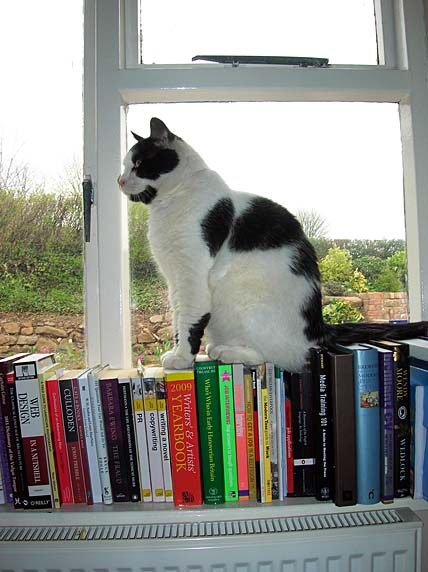
books_small

My intern has been working overtime.

Review: Little & Lane at Birmingham Conservatoire.

Tags

, ,

The Birmingham Post isn’t always able to post online everything that I’ve written for its print edition, so – after a suitable time lag (you should really go out and buy the paper!) – I’ll be posting my recent reviews here. As per the print edition, they’re all fairly concise – just 250 words. This is of a performance at Birmingham Conservatoire on 1 December 2015.


Tasmin Little

The ideal duo partnership is more than the sum of its parts. The two musical personalities don’t merge, exactly, but balance, complement and inspire each other to create a performance that enshrines the qualities of both artists – and still sounds like it sings with one voice.

That’s exactly what we got from Tasmin Little and Piers Lane in César Franck’s Violin Sonata, the climax of this lunchtime recital at Birmingham Conservatoire. It’s too simple to say that Lane’s piano represented the dark and Little’s violin the light side of Franck’s masterpiece. Both shared the same ability to charge a repeated sequence of notes with mounting emotional intensity; both understood instinctively when to make a phrase growl or gleam.

But even at its most tranquil, an undercurrent of passion drove the whole performance. Franck’s runaway accelerandos and torrential outbursts of emotion have rarely sounded more natural, or more necessary. Earlier, the pair had dispatched Brahms’s FAE Scherzo in a single symphonic sweep, and made a poetic case for Szymanowski’s neglected D minor sonata, Lane colouring his staccato chords to emulate the texture of Little’s pizzicato, and Little spinning delicate golden tracery in the skies above.

And as an encore, they pulled out an exquisite, recently rediscovered miniature by William Lloyd Webber – father of the Conservatoire’s new principal. It was enough to make you forget that you were in the grotty old Adrian Boult Hall. With artists of this quality and a sizeable and enthusiastic audience, there was no better demonstration of the promising new spirit that seems to be blowing through the Conservatoire.


On the Road

Tags

, , , , , ,

Milton Keynes

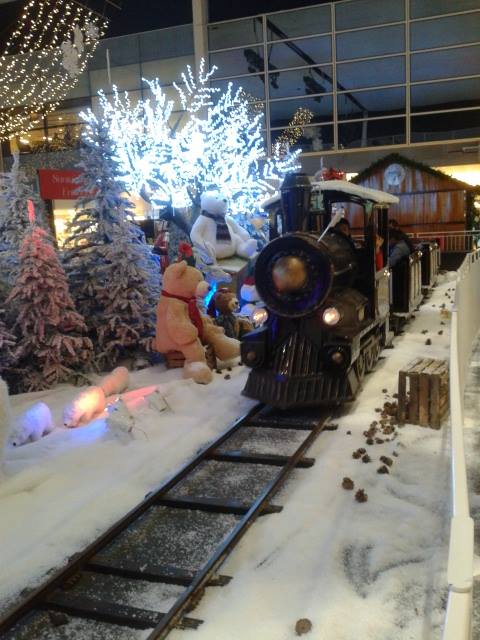
Oh b*gger, that’s Christmas and it’s coming straight at us.

November was looking quiet; then a couple of emails and suddenly I haven’t blogged for over a fortnight. In the last 9 days I’ve somehow found myself seeing four different operas in three different cities, playing Rachmaninoff’s The Isle of the Dead and squeezing in a bit of contemporary music too. Here’s what I’ve been up to when not at my desk:

– Visits to the Royal College of Music, Birmingham Conservatoire and Guildhall School of Music and Drama for my ongoing Amati Magazine survey of string departments at the UK’s music colleges. The RCM article is here.
Glyndebourne on Tour‘s Die Entfuhrung aus dem Serail at Milton Keynes (review forthcoming in The Spectator)
– Birmingham Contemporary Music Group for The Birmingham Post and The Arts Desk (plus the discovery that the composer Patrick Brennan is a really impressive new voice)
– Welsh National Opera’s I Puritani for The Birmingham Post
Opera North’s Jenufa in Nottingham (also for The Spectator – watch this space!)
– Welsh National Opera’s Sweeney Todd for (I thought) the Birmingham Post, though it actually appeared in the Mail. And my feature-length preview of the same show popped up there too.
– and then playing the cello badly in a programme of Rachmaninoff, Prokofiev and Elgar with my old friends at the Wrexham Symphony Orchestra. At last my arm is complete again!

sweeney02

WNO’s Sweeney Todd: I could murder a pie

Plus I’ve been writing about James Bond for the CBSO, Ligeti for the Barber Institute, and some fun seasonal programmes for West End International and the RLPO; not to mention some exciting projects with the LPO, RPO and Ulster Orchestra, including an enjoyable chance to spend some quality time with Johan Wagenaar’s wonderful Cyrano de Bergerac overture (give it a try).

Anyway, that’s why I’ve been quiet.  Then I looked up and…it’s basically one month to Christmas. Oh, b*gger.