Amati Magazine: Essential Reads

Tags

, , ,

My colleague and greatest living Korngold fan Jessica Duchen took over editorship of The Amati Magazine earlier this year, and has quickly turned it into one of the must-read classical music blogs – which will come as no surprise to anyone who follows her own long-running music blog. Anyway, I was incredibly flattered to be asked to contribute, and delighted that Jessica was willing to indulge me with a project I’ve been keen to undertake for years – a series of articles about my favourite classical music reference books. Three have appeared so far – Cobbett’s Cyclopedic Survey of Chamber Music (crazy name, crazy book); The Well-Tempered String Quartet (if you’re an amateur quartetter yourself you’ll know it, if not…well, my thoughts are here) and the Pelican Guide to Chamber Music.

Have a look, and while you’re there, have a browse around – The Amati Magazine is full of good things these days. Jessica’s typically insightful and engaging interview with Raphael Wallfisch gave me quite a few nice talking points when I interviewed Raphael prior to the Orchestra of the Swan’s concert at Birmingham Town Hall yesterday.

The Ice Break

Tags

, , , ,

The best bit about my job is that I get to see – if not quite as much opera as I’d like – pretty well as much opera as is available to be seen in the West Midlands. This month’s reviews have ranged from a community opera in a Worcestershire country church to the Royal Opera House’s live cinematic relay of Brecht and Weill’s The Rise and Fall of the City of Mahagonny, as well as English Touring Opera’s annual spring triple bill.

Two of ETO’s offerings were Donizetti rarities – one (The Wild Man of the West Indies) a triumph, one (The Siege of Calais) a heroic failure – and while it’s always nice to have the chance to see unknown works done with such conviction and quality, the heart sinks slightly at the news that there’ll be more Donizetti next season. I’m not entirely sure the West Midlands needed two productions of Anna Bolena in one decade (let alone Maria Stuarda) – at least, not when that decade hasn’t seen a single professional production of Peter Grimes, Der Freischutz or Un Ballo in Maschera (to choose just three from a long list) in the region. On the other hand, if ETO’s forthcoming Pia de’ Tolomei is anything like as wonderful as their production of The Wild Man of the West Indies (aka Il Furioso all’isola di San Domingo), which I saw last night at Warwick Arts Centre, I’ll feel very churlish indeed for saying so.

Anyway, although The Birmingham Post is currently struggling to post reviews online, it did manage to get one if my recent reviews up within 48 hours of filing. And happily, it’s my review of what might just turn out to be the greatest thing I’ll see all year. Following on from last year’s tremendous ETO King Priam, the Tippett revival really seems to be gathering steam. And about time too

Young Orchestra for London

Tags

, , , , ,

I finished my full-time job at the CBSO on 11th February – and haven’t stopped for  a moment since. It’s no secret that freelance work tends to be higher-intensity than work in an office, and I’ve certainly found that to be the case; even more so since I’ve been entirely freelance.

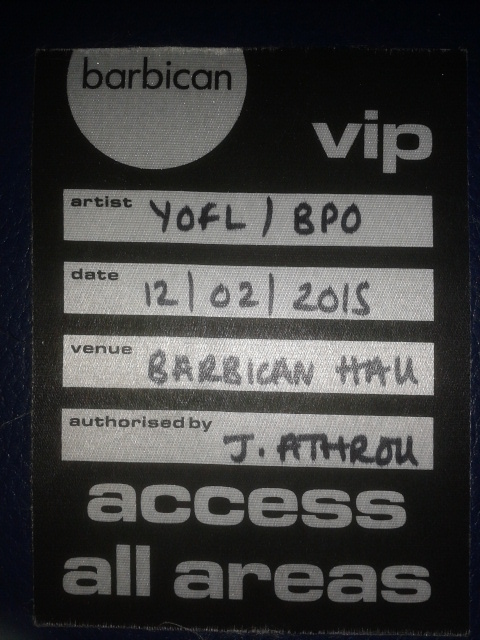
Anyway, I didn’t have any time for nostalgia about my old career because first thing on 12th February, I was chatting on the phone to Gavin Plumley about this year’s Salzburg Festival programme. Then, with barely time for the big mug of freshly-ground coffee I’ve been promising myself as a perk of the freelance job, I was on the train down to London to attend the final rehearsals and debut performance of Sir Simon Rattle’s Young Orchestra for London at the Barbican – an afternoon’s work that, entirely unexpectedly, culminated in my hearing Rattle and the Berliner Philharmoniker perform the last three Sibelius symphonies. Now that is a perk – and definitely worth the mad sprint to Euston afterwards, just in time for the last train to Lichfield.

After nearly two decades in the orchestra business, it’s encouraging to know that I can still get a bit of a buzz from being given something like this.

20150223_145038

And it was fantastic to catch up with some old colleagues – Ben Gernon and Paul Keene – to meet hitherto Twitter-only acquaintance Kelly Lovelady and, of course, to gather vox pops and backstage stories for the purpose of my visit: a “Digital Essay” on this whole fantastic project. I finished the words on Sunday 15th February and Sidd Khajuria and his team at the Barbican transformed it into a rather fabulous-looking digital account of the Young Orchestra, ready to go live on Friday 20th.

Here it is. It was huge fun to write, but I can’t deny that I’m thrilled with the transformation that Sidd and his colleagues have wrought on my words. This was the first big job of my fully-freelance career, and I couldn’t have asked for a more inspiring one.


Liverpool Phil: Kind of Blue

Tags

, , ,

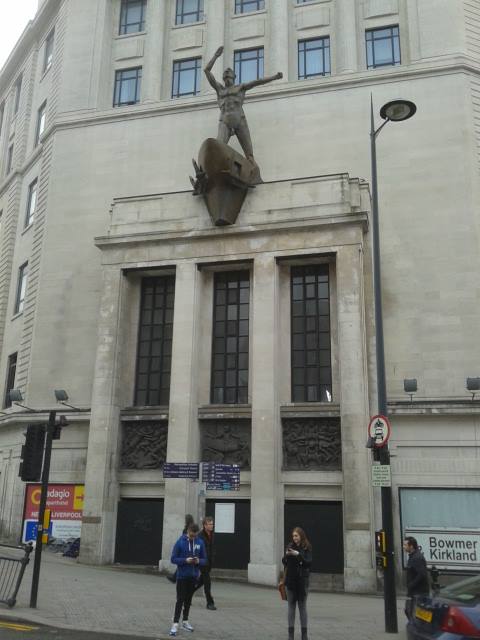
I made a flying visit to my hometown of Liverpool on Wednesday to discuss the RLPO’s 2015-16 season. I always get a special buzz every time I step off the train at Lime Street; in what other UK city would they ever have put colossal Jacob Epstein sculptures on the façade of a department store?

Epstein 1 Epstein 2 Epstein 3 Lewis's

I go back a long way with the RLPO and its home, the Liverpool Philharmonic Hall, and it’s always nice to have a chance to catch up with some old friends – both human and architectural. The Hall is halfway through a major refurbishment, and the admin team is currently camped out in a rather elegant-looking Regency terrace on Rodney Street.

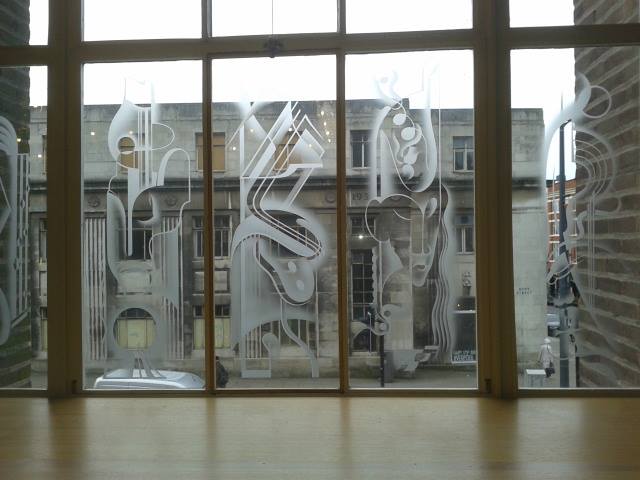
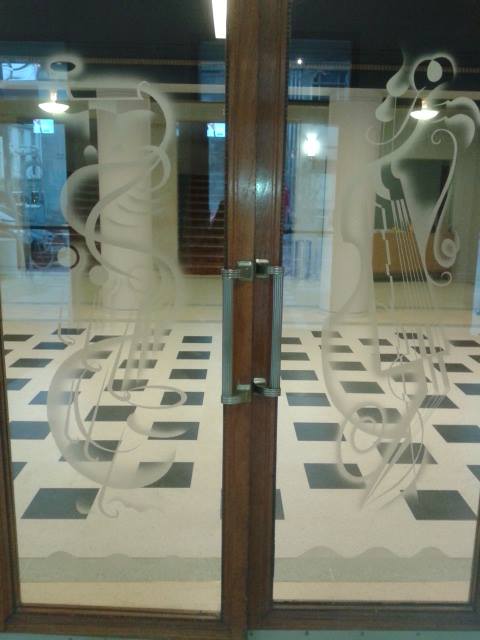
But up on Hope Street, the refurbished foyer and auditorium are already back in action. I popped in for a very quick inspection, and was glad to see that the gorgeous abstract Art Deco engravings that make this (in my far-from-objective opinion) the most beautiful concert hall in the UK are still in pride of place on the front doors and the windows of the Grand Foyer.

Phil bar glass Phil deco Phil doors

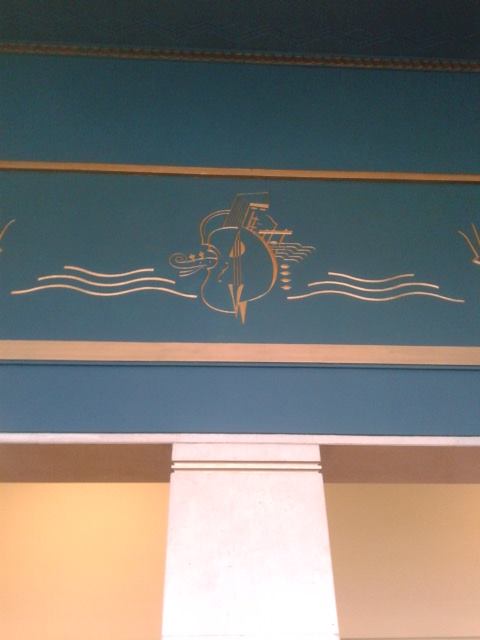
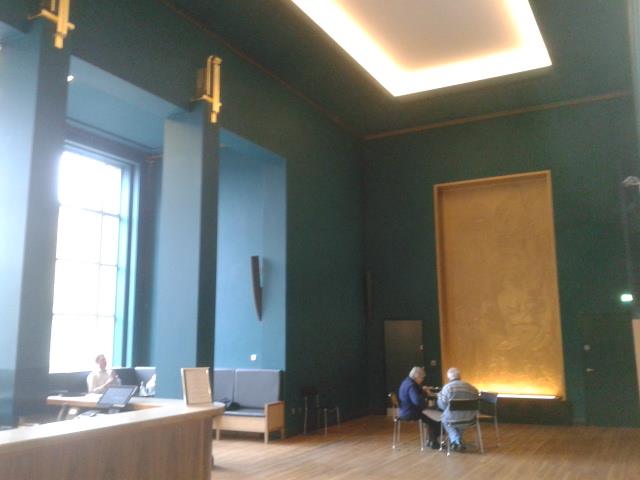
The most obvious change – apart from a rearrangement to the layout of the Bar itself (the third since I started visiting the Phil in the 1980s; it looks good, though they’d be hard-pressed to fit a string sectional rehearsal in there now, as we sometimes used to do back in my Merseyside Youth Orchestra days) – is the decision to paint the Grand Foyer in a sort of dark teal colour.

It brings out the gold Deco details nicely, and creates a dramatic setting for the huge, gold mythological relief panels at each end of the Foyer. When the whole space is lit up and bustling with people on a concert night, it’ll be both smart and atmospheric. But…well, I’ll have to give it time; it’s strikingly different from the Phil I’ve always known. I’ve a feeling it’ll wear well, actually.

Phil bar

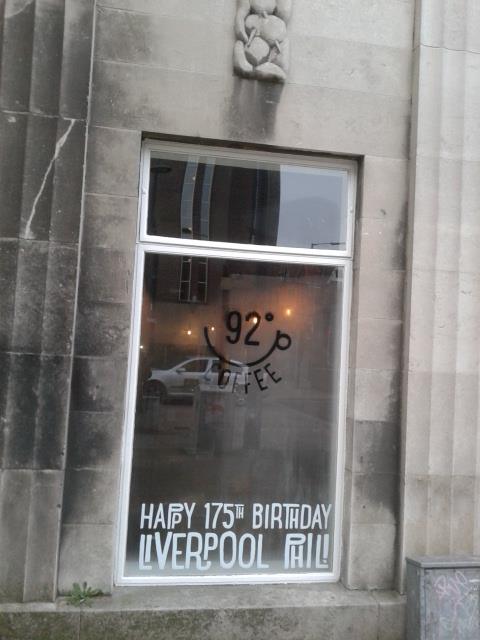
Of course what really matters is the sound in the auditorium. That’ll have to wait for another visit – I’m long overdue a reunion with the RLPO. There’s no orchestra in the UK with a warmer, more stylish sound, or that I love more. Meanwhile, walking off down Leece Street, I noticed this in a coffee house window. Always special to be in a place where an orchestra is so much part of the life and lore of the city; it even has an affectionate nickname. No-one in Liverpool ever calls the RLPO or the Philharmonic Hall anything other than “the Phil”.

Phil cafe window

2014 appears to have vanished…

Tags

, , , , , , , , , ,

Everyone’s doing it so, a few days late, five selected musical highlights of 2014.


Welsh National Opera: Boulevard Solitude I know, I know…I’m supposed to go for WNO’s Moses und Aron, but I can’t help feeling that a really stupendous musical performance – plus an understandable missionary zeal amongst my colleagues – can’t quite make up for a production that basically avoided the issue. (Review here). Henze’s Boulevard Solitude, though…what a score! What a set of performances! And how they all came together to do exactly what this opera is surely supposed to do. (Review here).


English Touring Opera’s Spring Season ETO’s annual spring seasons at Wolverhampton Grand Theatre are a guilty pleasure for me – and a secret one, apparently: you’d think the music-lovers of Birmingham (population 1.1 million) would have worked out by now that with a 20 minute train-ride they could be seeing opera of this quality. Apparently not, judging from the empty seats for the Britten (though it can’t have helped that the Grand’s box office had mixed up the dates for Paul Bunyan and The Magic Flute – leading befuddled first-timers in the audience trying to work out why Papageno was strumming a guitar). They missed a Magic Flute that charmed and probed in equal measure, and, as I hoped, turned out to be the perfect choice of first live opera for my 12-year old godson  (“I didn’t know it would be like panto” he said when we saw it in Sheffield a month later). (Review here) A big-hearted, beautifully-designed Paul Bunyan (Mark Wilde as understatedly magnificent as always) that made the best possible case for – sorry – an absolute car-crash of a piece (Review here). And – thanks to the belated discovery that Cheltenham and back is do-able in a night from Birmingham – a shattering, monumental King Priam. (No review: there purely for pleasure) A tremendous achievement: god, Tippett is undervalued, isn’t he? Quite indecently excited now at the prospect of Birmingham Opera Company’s forthcoming The Ice Break.


Lichfield Cathedral Chorus: The Apostles Local choral societies don’t get national reviews. But I’ve been trying to persuade the Birmingham Post for some time that something a bit special is happening at Lichfield Cathedral (and not just because it’s 3 minutes from my front door). The cathedral’s musical team of Ben Lamb, Cathy Lamb and Martyn Rawles are young, gifted, and ambitious in the best possible way (the budget for the orchestra and soloists for this performance alone apparently cleaned out the Chorus’s coffers for the foreseeable future: respect due). And there’s no getting around the fact that Elgar’s choral writing taxed the Chorus beyond its limits. But the soloists were first-rate, the orchestra (Alex Laing’s DECO) was on fire and the sweep, musicality, and sense of shared adventure about the whole enterprise…well, it glowed in exactly the way it must have done in Elgar’s imagination. Grass-roots music making in the UK, and a living amateur tradition, continues to give us something as stirring – and as profoundly musical – as the most lavishly-funded international orchestra or opera house. (I submitted a review to the local paper but it never appeared in print. Two weeks later a review at three times the length by a writer I don’t know did appear, which I suppose is the main thing, but still…*rolls eyes*.)


Royal Opera House: Die Frau Ohne Schatten I adore Strauss and having missed the last UK production of FrOSch in the 90s, I realised that I couldn’t really risk waiting 20 years for another chance. Having shelled out for the necessary hotels and train tickets, and booked two days off work (in the absence of weekend matinees, the only way to do it from the Midlands) I can only say that boy, it was worth it. I can add nothing to the praise that’s already been heaped on this production: it echoed in my head for days afterwards. Yes, London receives an indefensible 15 times as much arts subsidy per head as the rest of the UK; an attempt to buy a drink in the Floral Hall left images of underfunded education projects, rejected funding grants and decades of shoe-string compromises in the regional arts swirling furiously in my mind. (“We don’t serve Prosecco” sniffed the barman – well, there’s one thing that the Royal Opera House has in common with Wolverhampton Grand Theatre, then.) But with singing like we experienced that night, you can at least hear where the £££s are going. File under “sinful pleasure”. Normal service will be resumed shortly.


Mihkel Poll in Sutton Coldfield It’s received wisdom that small local music clubs are dying out. Martyn Parfect, who runs the Sutton Coldfield Philharmonic Society, merely sees that as a provocation – he thinks big, and never bigger than when he’s twisting the arms of international soloists to play in Sutton’s Victorian linen-cupboard of a Town Hall. Pianistically, Pohl’s performance of Rachmaninov’s Third Concerto with local semi-pro band the Sinfonia of Birmingham was as fine as you’d expect. What lifted this to another level was watching and hearing the effect that an artist of his calibre had on the orchestral players – and the masterly (there’s no other word for it) way that the conductor, my colleague Michael Seal, coloured the music and shaped the concerto’s architecture in one huge, cumulative symphonic line. It’s always nice to be able to give a glowing review to artists you like and admire; in this case, no critical detachment was required. The performance set its own terms (Review here).

Victor Hely-Hutchinson’s Box of Delights

Tags

, , , , , ,

So here it is, Merry Christmas, and we have it on unimpeachable authority that everybody is having fun. Forgive me: I lived in Wolverhampton for eight years (well, it was good enough for Percy Young) and Noddy Holder is like a god there.

I’m not the world’s greatest fan of seasonal pop music. But I am, however, a fan of Victor Hely-Hutchinson’s A Carol Symphony – a work with a deep connection to the English Midlands, and not just through its association with successive dramatisations of The Box of Delights. Here’s a blogpost I wrote in 2009 about the music and its (largely forgotten) composer. When it was first published I was delighted to receive a charming and kindly email from the composer’s then-78 year old son Christopher, who was living in Ludlow. Hopefully he still is. Happy Christmas!
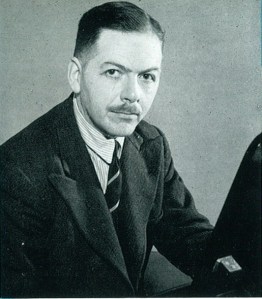

Hely-Hutchinson

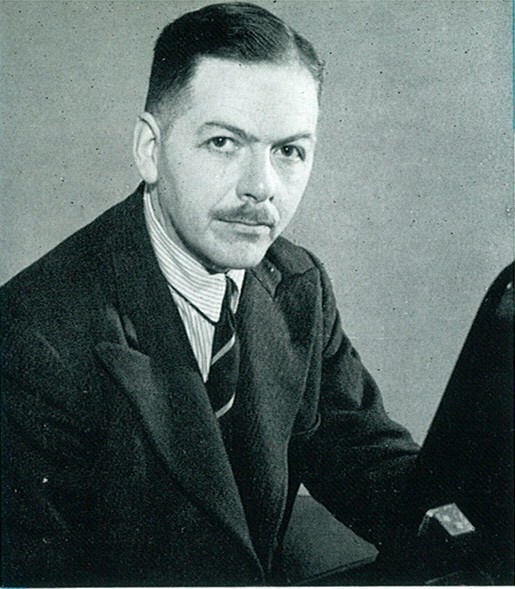
Victor Hely-Hutchinson (1901-1947)

When I was 11, my younger sister and I were both captivated by the BBC’s TV adaptation of John Masefield’s The Box of Delights. She liked the fantastic story, and the Christmassy atmosphere; I liked the steam trains. But one thing that we both loved, and which seemed to capture the whole wintry magic of the thing, was the signature tune – which we could tell, even then, was “proper” music, not just a typical children’s TV theme (this being the early 1980s, the lack of synthesizers was the giveaway). Here’s that title sequence in full (warning, unseasonably noisy Youtube advert may play first!).

I asked my father if he knew what it was – not realising that a pre-war radio dramatisation of The Box of Delights, with the same music, had become a seasonal classic for an earlier generation. Or that my father – at much the same age – had asked exactly the same question. He pulled out a Classics for Pleasure LP with a snowy landscape on the cover. The piece on it was called Carol Symphony, and the composer was Victor Hely-Hutchinson.
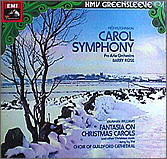
Carol Symphony cover 1

Sleeve art the way it used to be.

The record-sleeve told us that he’d been born on Boxing Day 1901, and had been Regional Director of Music for the BBC in Birmingham. It wasn’t very easy to find out much more back then, but it is now, and for the full story, there’s an excellent online biography by his son John. In short, Christian Victor Hely-Hutchinson was born in Cape Town, studied music with Charles Villiers Stanford and Donald Tovey, and at the age of 12 played a Mozart piano concerto with the LSO. In 1933 he landed the Birmingham job, and rapidly involved himself with every part of the city’s musical life – not least the 13-year old City of Birmingham Orchestra and its then music director Leslie Heward.

Hely-Hutchinson never held an official post with the CBO – but he was a tireless supporter of the Orchestra throughout the 1930s and 40s. The CBSO’s performance record-cards from that period are dotted with the initials VHH – indicating that he’d written the programme notes for a particular work. He gave pre-concert lectures (he took a doctorate in 1941, though he’d held the Chair of Music at Birmingham University since 1934). He appeared as piano soloist with the orchestra, notably in Mozart concertos, and in 1944 he performed his own rhapsody The Young Idea (intriguingly subtitled “cum grano salis”) with George Weldon conducting. It’s recently been recorded by Dutton.

And he did it all with consummate professionalism. The CBO’s manager Gerald Forty (of the piano-makers Dale, Forty) remembered that:

His quiet confidence was most reassuring. I see him in my mind’s eye, sitting at my desk. He knocks out a half-smoked pipe, his inseparable companion: fills it, lights it, takes a few puffs – finds it won’t draw – scrapes it out, refills it, wastes more matches – and so on da capo. While my ashtrays were being filled, his mind was concentrated on the matter at hand, and with a remarkable economy of words, he stated his views and recommended a solution.
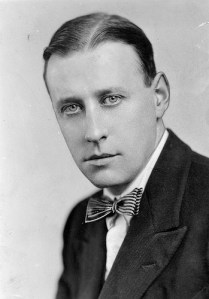
Leslie Heward

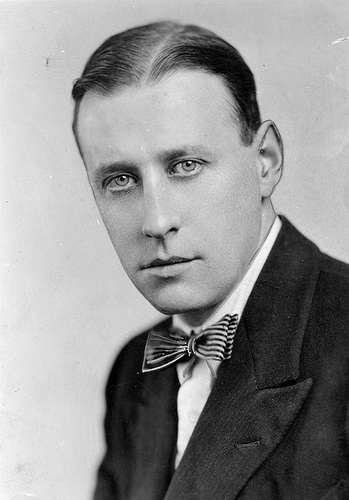
Leslie Heward

But it was during wartime that Hely-Hutchinson gave his greatest service to the CBO. In early 1940, while working as a volunteer Air Raid Precaution warden, he performed (from memory!) a complete cycle of Beethoven Piano Sonatas at the Birmingham and Midland Institute – in aid of Orchestra funds. Meanwhile, he corresponded regularly with Leslie Heward, then recovering in Romsley Sanatorium from the TB which was to kill him just three years later. When Heward died in May 1943, Hely-Hutchinson rallied to the support of the CBO. As Forty recalled:
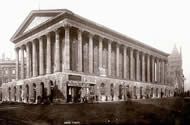
birminghamtownhall

Birmingham Town Hall in wartime. Hely-Hutchinson took part in ARP fire drills on the roof.

The problem of finding another conductor at short notice and of maintaining a full complement of players with War staring us in the face, was one of extreme perplexity; but Victor solved it by the apparently simple expedient of doing the entire job himself – including the compiling of programmes, rehearsing the orchestra (which he did anonymously and gratuitously for many years), conducting the concerts and dealing efficiently and decisively with the innumerable emergencies…

Hely Hutchinson was initially unconvinced by Heward’s successor, George Weldon, but with typical fair-mindedness was happy to revise his opinion after Weldon had settled into the post a year or so later:

“I want to tell you how right I think you were about George Weldon – and by the same token, I was wrong – eighteen months ago” he wrote to a colleague in June 1944. “As a pure musician, I cannot think him the equal of Leslie, but then, practically nobody is, and some of George’s performances – notably of Mozart – made me feel that he has the root of the matter in him”.

The following year, Hely-Hutchinson was offered the post of Director of Music for the BBC in London, and swapped his home near Droitwich for one in St John’s Wood. But he remained a familiar face in Birmingham music, and there was genuine shock in the city in March 1947 when the news arrived that he had died of pneumonia, aged just 45. The CBO paid its own tribute three weeks later, when Weldon conducted the first performance of Hely-Hutchinson’s recently-completed Symphony for Small Orchestra. (The concert was broadcast, and an incomplete recording survives in the CBSO archive).

Somehow, in this short but full musical life, Hely-Hutchinson found time to compose around 150 original works. The best known (by a country mile) is the Carol Symphony, from 1927, but there’s also an irresistible setting of Old Mother Hubbard “in the style of Handel”, which amusingly skewers the absurdities of baroque vocal style; and two shorter works, the Overture to a Pantomime and The Young Idea. Both have recently been recorded. They all show superb craftsmanship, a masterly ear for orchestral colour and a warm, thoroughly engaging sense of musical humour. They’d all merit an outing in the concert hall.

But the Carol Symphony has never quite left the repertoire (the most recent Birmingham performance was in December 2000). Far more than a mere seasonal medley, it’s actually a lovely and very English folk-song sinfonietta in four movements, in the spirit of Moeran, Vaughan Williams and John Ireland.

It’s packed with good things: the bustling mock-baroque figuration of the first movement (a sort of chorale-prelude on O Come All Ye Faithful), the jazzy, Walton-esque verve of the scherzo (God Rest Ye Merry); splashes of Handel, Elgar, and polytonal Stravinsky; the way Here We Come A-Wassailing trips in on the woodwind as the fugal finale bounds towards its grand, horn-trilling finish. And above all, that slow movement, in which Hely-Hutchinson sets the Coventry Carol to bleak, frozen harmonies that anticipate Vaughan Williams’ Sixth – and then, with dancing harp, muted strings and finally full orchestra, lightens our darkness with the gentlest and most enchanting setting ever made of The First Nowell.

A Box of Delights, indeed. Whatever else we remember him for, in the Carol Symphony Victor Hely-Hutchinson gave us something very special, and enduringly beautiful. Hely-Hutchinson’s CBO colleague and friend Gerald Forty, once more:

The Carol Symphony has become a standard Christmas piece for the City Orchestra: may it long continue to figure in those programmes as a reminder of the well-loved man to whom the City of Birmingham Orchestra and the Birmingham musical public owes so much.


Any copyrighted material is included as “fair use” for critical analysis only, and will be removed at the request of copyright owner(s).
Countertenors and tubas at Lichfield Cathedral

Tags

, , , , , ,

Selwyn tomb

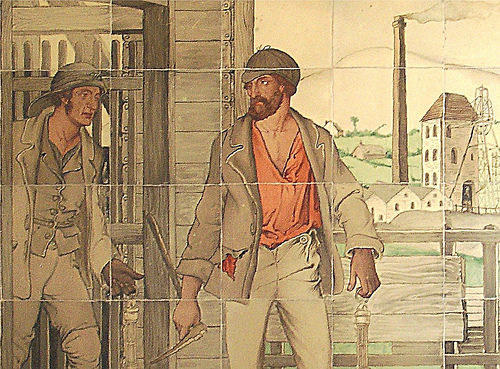
This picture comes from the tomb of the 19th century Bishop Selwyn of Lichfield. It’s in the Lady Chapel at Lichfield Cathedral, and this tiled rendering of a pit on the nearby Staffordshire coalfield is the backdrop to a fabulous Victorian confection of stone Gothic tracery, brass lettering and a gleaming, life-sized marble effigy of the great Bishop himself. No-one saw anything odd about putting this image in a mock-Medieval tomb in a real Medieval cathedral. The scene – so recognisable to members of the Bishop’s flock – was part of the flesh and blood of his life and ministry; being truthful, it couldn’t be incongruous. (At the other end of the tomb, similar painted tiles show a Maori war-canoe and tree-ferns – Selwyn spent much of his career in New Zealand).

It came to mind because on Saturday night, Birmingham Post business (and to be honest, a fair bit of personal pleasure) took me to a performance of Part One of Handel’s Messiah by the Lichfield Cathedral Chorus, accompanied by the Staffordshire Brass Band. My review of the performance is here; but even before the night, I was surprised by the way musical friends reacted to the very notion of a brass band accompanying Handel. “Christ, no!” exclaimed one. “This is all wrong” declared another. At which I could only think: how could something wrong, sound so right?

Wasn’t Handel’s music once the staple of amateur ensembles across the UK, performed with enthusiasm by groups of all sizes and skills? Isn’t that still the case – and isn’t that a good thing? Aren’t we glad that performers and listeners feel able to co-opt a great work of art into their own musical lives and traditions? And talking of traditions, haven’t we all now accepted that the brass band movement in this country is our very own, original, “Sistema” – a grass-roots, community-based musical movement capable of producing virtuoso players of international calibre, and an inspiration to composers from Holst to Robert Simpson?

The performance was sincere, the playing bright, precise and wonderfully fresh; I’m ashamed to say that I heard harmonies in the overture that I’d never noticed before. But then, I’ve been a gigging cellist. I know how under-rehearsed scratch string ensembles feel about the annual Messiah with their local choral soc. This was very different.

I’m not saying that I’d always trade a smart, sensitive period-instrument orchestra for a brass band or even a Beecham-esque full symphony orchestra; just that no one performance style or tradition can ever have the final word on a work as limitless as Messiah. Also that it’s not every day you get to hear a really cracking countertenor singing against tenor horns and cornet. Plus, those tubas sounded like they were having the time of their lives. It felt right; it felt real; and I think that’s a feeling that Bishop Selwyn – not to say Handel himself – would have understood.

Seventy-word Season.

Tags

, , , ,

It’s December, and that means that the annual classical music copywriting season is roaring away from the starting line. I’m a lucky to have a range of great clients, each with distinctive needs and preferences for their promotional copy. No two orchestras or promoters are quite the same, of course, and while some send their annual season brochures to print shortly after Christmas, others work on them right through to Easter.

That suits me fine: it gives me the chance to focus on each client individually, and really get into the swing of their preferred style and length. Some like their text bubbly and informal, others prefer a more specialist tone. Some have space for 100-150 words per concert; others need it all wrapped up in 60 words (copywriters always have to be mindful of the designer’s needs). Increasingly, clients want tweetable summaries too – a whole concert outlined in 140 characters. After writing a few bits of copy, in a certain style and length, it starts to flow – and before you know it you’re even writing Facebook updates and Christmas letters in zippy 70-word paragraphs.

It’s tremendously stimulating work, and it’s a privilege to get a confidential preview of what some of my favourite orchestras and venues are planning over the next twelve months. And it’s enormously rewarding to act as an advocate for some really glorious music-making. To have the chance to persuade thousands of people that they’ll love Glazunov’s The Seasons, to hear what a new conductor has to say about a Beethoven symphony, or to overcome their fears about Schoenberg.

There’s just one downside to writing these “blurbs” (as absolutely everyone ends up calling them). Months later, after the work’s been done and they’re all in print, they have a tendency to draw friendly fire. That’s summed up for me by the national critic who took issue with my 70-word summary of a performance of Verdi’s Requiem. Prompted by a friend from the non-classical world who habitually refers to all choral music (whether Tallis, Haydn or Orff) as “the death music”, I’d written that Verdi’s great, pulsing, blood-and-thunder blow-out “isn’t exactly what you expect from religious music”. “Over 40 years I’ve seen every one of Verdi’s operas” huffed this gentleman on Twitter, “and the Requiem IS exactly what I’d expect”.  

But, but (as I tried to cram into 140 characters) that’s the whole thing about blurbs. I know that. You know that. You’ve seen every one of Verdi’s operas, and doubtless a Requiem a year for the last four decades. You don’t need to be told what to expect. In fact, you don’t need a descriptive blurb in a concert brochure or on a website at all. Like many really seasoned concert-goers, you’ll have been able to form a good idea of what to expect from the name of the piece and the listing of the performers alone. No piece of prose, however enthusiastic or erudite (or both) is ever likely to alter the well-informed judgment you’ve made for yourself.

That being the case, dear sir, does it not perhaps occur to you that…it might have been written for someone else?

Tŷ Cerdd: Williams plays Jones

Tags

, , , , , , , , , ,

I’m ashamed to say that it took this round-up of the year’s musical “firsts” by Fiona Maddocks to alert me to the existence of this new disc – the label’s first – from Tŷ Cerdd. Any new recording of the music of the remarkable Welsh symphonist Daniel Jones (1912-1993) is good news, as is anything from Llŷr Williams, with whom I’ve twice been privileged to share a concert platform in Wrexham.

Welsh music is unquestionably neglected in the rest of the UK (there are some horribly condescending remarks about it in John Drummond’s otherwise terrific memoir Tainted by Experience) but you’d think that Daniel Jones’s influence on post-war literature, quite apart from his powerful, poetic and fiercely intelligent music, would be enough to make him a figure of UK-wide interest. Apparently not. Let’s hope this leads to a higher profile – wonderful, and fitting too, to see Jones paired with Bartok here.

But anyway, here’s the moment I first discovered and fell in love with Jones’s music: the programme note I wrote for an all-Welsh programme by the Wrexham Symphony Orchestra in 2004 – a sort of general introduction to the Welsh orchestral tradition (and my first programme note to be published bilingually, in English and Welsh). It was a glorious evening of music. Alun Hoddinott, William Mathias, Grace Williams, Daniel Jones…ten years on I’m still exploring the riches we uncovered that night.


Praise the Lord! We are a musical nation. Dylan Thomas: Under Milk Wood

In a land with a thousand-year musical heritage, Welsh orchestral music is still a relatively new flower. The oldest piece in this concert is just 64 years old; and two of the five composers on the programme are still very much alive and writing. And yet this short period – barely more than a generation – has seen the birth of an entire national repertoire, and, what’s more, the creation of a new and unmistakably Welsh musical language. Not one of these pieces sounds like it could have been written in any other country. How can a piece of music “sound Welsh?”

An obvious way would be for it to use folksongs – obvious, but not the answer. The Shropshire-born composer Edward German used Welsh folksongs in his Welsh Rhapsody of 1904 – and the result sounds like pure Elgar. While Elgar, of course, sounded utterly “English” without using a single folksong in his life! Although Welsh composers have drawn inspiration from Welsh literature, and traditional techniques like penillion singing, folksongs are noticeable by their absence from most (but not all) of tonight’s programme. Likewise – there’s that most Welsh of instruments, the harp. All these composers use the harp brilliantly but sparingly – that’s not the key to musical Welshness either. In any case, for all its bardic associations, the harp came to Wales only in the 17th century – from Italy. When Felix Mendelssohn encountered Welsh harpists in a Llangollen inn in the 1820s, they were playing hits from recent Italian operas! He preferred the lead-miners’ dances he heard at Loggerheads.

Please, no national music! Here I am in Wales…and a harper sits in the vestibule of every inn and never stops playing so called folk-melodies, that is, infamous, common faked stuff. Felix Mendelssohn: Letter to Carl Zelter, 1829

But Welsh music has always been receptive to outside influences, and its history before the 20th century is far richer than just a folk tradition. Wales’s folk-dances were cast aside during the religious revivals of the late 18th and 19th centuries, but folk-songs survived, filtered through chapel hymns, choral singing, the cult of the harp and the brass-band tradition of the new industrial regions. All of this can be heard in the music performed tonight – the rich, dark harmonies of chapel choirs and the craggy brilliance of brass bands run like mineral seams through the music of Mathias, Hoddinott, Williams and Jones.

Celtic consciousness is both rhetorical and lyrical; on the one hand darkly introspective and, on the other, highly jewelled, dance-like and rhythmic. William Mathias

So too do the influences of Sibelius, Bartók, Vaughan Williams and Shostakovich – hardly icons of Welsh culture! But the Welshness of tonight’s composers is more than the sum of all these parts. Above all, Welsh orchestral music is a music of landscape. Sometimes it’s explicit – Grace Williams dedicated her Sea Sketches “To my parents who had the good sense to set up home on the coast of Glamorgan”, and Mathias headed his Harp Concerto with lines from R.S. Thomas’ poem Welsh Landscape.

More often, though, it’s simply implicit in the colours, the shapes and the powerful sense of atmosphere in all this music. You’ll hear dark, overcast passages suddenly illuminated by shafts of musical light, mountainous masses of sound offset by soaring blue-sky melodies, the chime of bells, as well as a boisterous, rough-cut exuberance as these composers re-invent Wales’ lost dance heritage. It’s outdoor music – and its freshness, rawness, grandeur and lyricism place it in a very particular outdoors.

If Beethoven had been born in the vale of Merthyr in 1770, he would have written no symphonies. John Edwards

One more thing. Wales had, and still has, a “grass-roots” musical culture that is the envy of English musicians. The great flowering of Welsh orchestral music since the Second World War is largely due to amateur musicians and music-lovers – in fact, along with the BBC Welsh Orchestra, Welsh National Opera, and the Universities, it was the youth orchestras and amateur musical societies that made it possible for a composer to have a career in Wales at all. And each of the composers in this concert was deeply involved in the cultural life of the nation. Daniel Jones edited the poetry of Dylan Thomas; Grace Williams made groundbreaking radio programmes; Mathias and Hoddinott both ran University departments and founded major music festivals. (Thanks to Mathias’ North Wales International Music Festival at St Asaph, he was a well-known figure to many members of this orchestra).

But above all, they wrote music to be played and enjoyed by the people amongst whom they lived. There’s no “squeaky gate” music here – none of the fads and mannerisms that make contemporary classical music a fringe interest in the rest of the UK. Many members of the Wrexham Symphony Orchestra (and not only Welsh members) grew up with this music in their youth orchestras; and many present tonight will have met Alun Hoddinott, Gareth Wood or William Mathias. Tonight’s concert is a celebration of a proud, and living, tradition.

Welsh National Opera in Birmingham: Bizet and Rossini

Tags

, , , , , , , ,

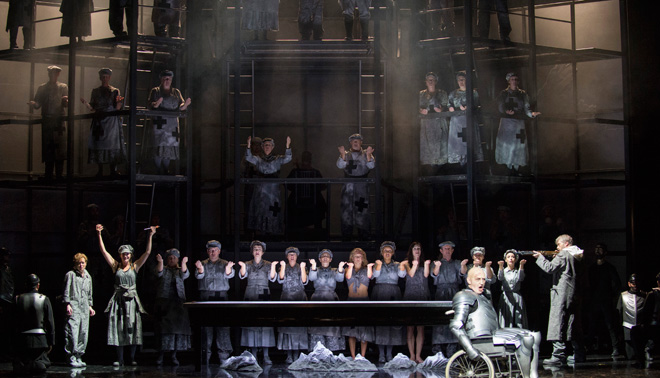
A bit closer to the present, my Birmingham Post reviews of all three operas in WNO‘s week-long autumn season in Birmingham are now online: the company’s basic (and now rather elderly) production of Carmen, and David Pountney’s new productions of Rossini’s Moses in Egypt and William Tell. (Ignore the strange single-sentence paragraphs; it’s editorial policy at the Post).

williamtell_660x378_08

Act 3 of Rossini’s William Tell: X-Men meets Patrice Chereau in David Pountney’s new WNO production.

Three overnight reviews in four days is the sort of stint that makes you feel your age; still, Birmingham is shamefully under-served for serious opera and I never miss a WNO production if I can help it. All of these were worth the trip; yet interestingly, while William Tell was undoubtedly the most satisfying overall theatrical experience, it’s Dal tuo stellato soglio, the great Act 3 prayer from Moses in Egypt, that still seems to be playing non-stop on my mental jukebox…